

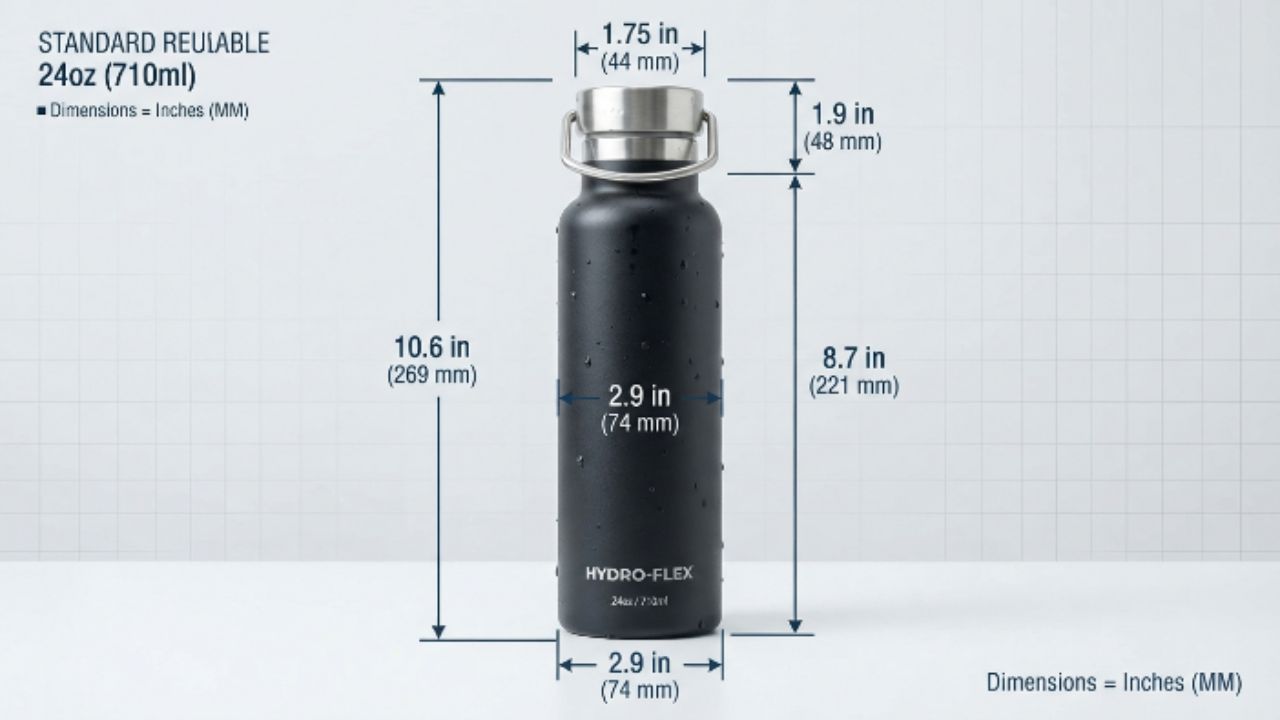
I never thought I’d spend a weird amount of time staring at a water bottle. Yet there I was one afternoon, trying to squeeze one into an overstuffed backpack side pocket before catching a train. It looked like it should fit. It absolutely refused. Funny how something as ordinary as a bottle suddenly becomes a puzzle about height, diameter, and just a tiny bit of patience.
That little moment made me realize most people buy bottles by color or brand, not by water bottle dimensions. Then later they discover it doesn’t fit a cupholder, slips out of a bike bottle holder, or won’t slide into a seatback pocket during a flight. Happens more often then you’d think honestly.
This guide is built for everyday people who simply want the right bottle without guessing. We’ll explore common water bottle measurements, compare sizes, explain capacities, discuss materials, and look at which dimensions actually matter in real life. Whether you’re buying a Plastic water bottle, a Stainless steel water bottle, an Insulated bottle, or a Reusable water bottle, understanding dimensions makes the choice much easier.
Understanding Water Bottle Dimensions
When someone says a bottle is “500 ml,” they’re only telling part of the story. Water bottle dimensions include much more than just volume.
Typically, dimensions describe:
- Water bottle height
- Water bottle diameter
- Water bottle width
- Overall Bottle shape
- Bottle cap design
- Empty Water bottle weight
- Total Water bottle capacity
Imagine two bottles that both hold 500 ml. One might be tall and slim, while another is shorter and wider. Both carry exactly the same amount of water, but they’ll fit very differently inside a Lunchbox, Side pocket, or car Cupholder.
That’s why looking only at capacity can be kinda misleading.
Standard Water Bottle Dimensions Chart
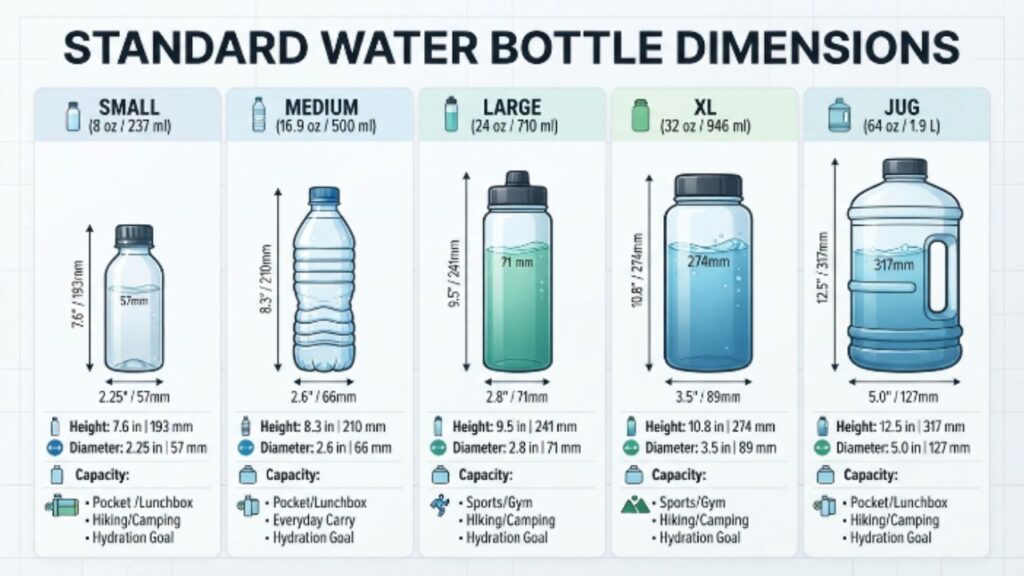
Below is a general water bottle dimensions chart showing common bottle sizes. Actual products vary slightly by manufacturer.
| Capacity | Height | Diameter | Weight | Typical Use |
|---|---|---|---|---|
| 237 ml (8 oz) | 15 cm (5.9 inches) | 5.5 cm (2.2 inches) | 50 g | Kids, medicine, travel |
| 355 ml (12 oz) | 21 cm (8.3 inches) | 6.5 cm (2.5 inches) | 100 g | Coffee replacement, office |
| 500 ml (16.9 oz) | 25 cm (9.8 inches) | 7 cm (2.75 inches) | 200 g | Everyday carry |
| 591 ml (20 oz) | 28 cm (11 inches) | 7.5 cm (2.9 inches) | 200 g | Sports |
| 750 ml (25 oz) | 33 cm (13 inches) | 7.5 cm (2.9 inches) | 400 g | Gym |
| 1 liter (33.8 oz) | 33 cm (13 inches) | 10 cm (3.9 inches) | 500 grams | Hiking |
| 1.5 liter | Approx. 33 cm+ | Wide body | Varies | Family travel |
| 2 liter (2000 ml / 67.6 oz) | Larger profile | Wide body | Heavy bottle | Camping |
These figures work as a practical Bottle dimensions chart and Measurement chart rather than exact manufacturing standards.
Water Bottle Size Comparison
One thing people ask all the time is, “Which bottle feels right?”
Here’s a simple comparison.
Small Bottle
A Small bottle usually ranges from 237 ml to 355 ml.
Perfect for:
- Children
- Quick meetings
- Air travel
- Small handbags
- Study sessions
Lightweight and easy to carry, although you’ll probably Refill it often.
Medium Bottle
The Medium bottle category includes:
- 500 ml
- 591 ml
This is considered the Standard bottle for everyday life.
Most people find these bottles offer the best balance between Portability, Comfort, and Daily hydration.
Large Bottle
A Large bottle includes:
- 750 ml
- 1 liter
Excellent for:
- Gym
- Workout
- Office
- Long drives
They’re heavier when full but reduce refill trips.
XL Bottle
Anything around 1.5 liter or 2 liter falls into the XL bottle category.
Great for:
- Camping
- Outdoor adventure
- Long Travel
- Marathon training
Not exactly handbag friendly though…unless your handbag secretly belongs to a giant.
Water Bottle Dimensions in CM and Inches
Many buyers search for water bottle dimensions in cm or water bottle dimensions in inches because stores use different measurement systems.
Here’s a handy reference.
| Metric Measurements | Imperial Measurements |
|---|---|
| 15 cm | 5.9 inches |
| 21 cm | 8.3 inches |
| 25 cm | 9.8 inches |
| 28 cm | 11 inches |
| 33 cm | 13 inches |
| 5.5 cm | 2.2 inches |
| 6.5 cm | 2.5 inches |
| 7 cm | 2.75 inches |
| 7.5 cm | 2.9 inches |
| 10 cm | 3.9 inches |
Knowing both Metric measurements and Imperial measurements makes shopping internationally a whole lot easier.
Water Bottle Capacity Explained
People often confuse Volume, Capacity, and dimensions.
Here’s the difference.
- Volume refers to the internal space.
- Capacity tells you how much liquid it holds.
- Dimensions describe the outside size.
Common capacities include:
- 237 ml
- 355 ml
- 500 ml
- 591 ml
- 750 ml
- 1 liter
- 1.5 liter
- 2 liter
Equivalent ounce sizes include:
- 8 oz
- 12 oz
- 16.9 oz
- 20 oz
- 25 oz
- 33.8 oz
- 50 oz
- 67.6 oz
Understanding these helps with ml to oz conversion, oz to ml conversion, liters to ounces, metric conversion, and imperial conversion.
Plastic vs Stainless Steel Water Bottle Dimensions
Not all materials create the same bottle.
Plastic Water Bottle
A Plastic water bottle generally has thinner walls.
Benefits include:
- Lightweight
- Affordable
- Easy to carry
- Usually made with BPA-free plastic
- Common Disposable bottle option
- Often includes a Plastic bottle cap
Because plastic walls are thinner, external dimensions stay relatively compact.
Stainless Steel Water Bottle
A Stainless steel water bottle usually has thicker walls.
Advantages include:
- Better Durability
- Excellent Temperature retention
- Strong Insulation
- More premium feel
- Often includes a Stainless steel screw cap
- Better odor resistance as an Odor-resistant bottle
However, insulation increases outside diameter even if internal capacity remains the same.
That catches people off guard sometimes.
Water Bottle Cap Types
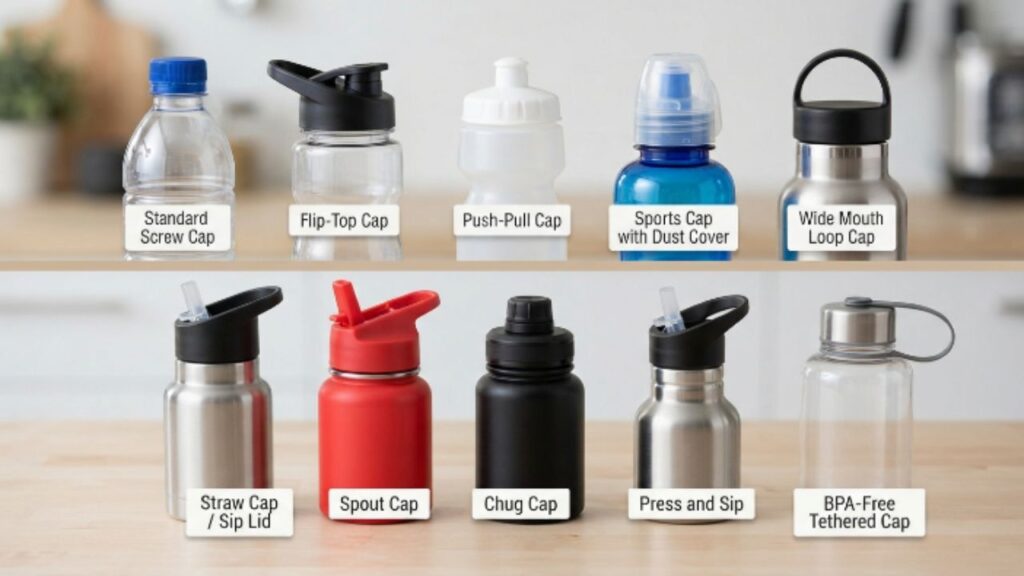
Caps influence usability more then people expect.
Screw Cap
A classic Screw cap or Twist cap offers reliable sealing.
Best for:
- Hiking
- Office
- Long-term storage
Flip-Top Cap
The Flip-top cap opens quickly.
Ideal for:
- Cycling
- Running
- School
Straw Cap
The Straw cap allows sipping without tilting.
Popular among:
- Kids
- Office workers
- Drivers
Push-Button Cap
A Push-button cap opens with one hand.
Great for:
- Gym
- Commuting
- Sports
Each cap changes convenience more than dimensions, but it definitely affects everyday experience.
Different Bottle Shapes and Their Dimensions
The Bottle shape changes how practical a bottle feels.
Common designs include:
- Classic cylinder bottle
- Ergonomic bottle
- Sports bottle
- Hydration bottle
- Travel bottle
- Gym bottle
- Kids water bottle
- Infuser bottle
- Collapsible bottle
- Jug-style bottle
A Classic cylinder bottle fits most Cupholder designs.
An Ergonomic bottle improves Grip.
A Collapsible bottle shrinks after drinking.
A Jug-style bottle emphasizes capacity over portability.
Meanwhile an Infuser bottle needs slightly larger dimensions because of the fruit chamber.
Choosing the Right Water Bottle Dimensions for Everyday Life
Different lifestyles call for different bottles.
Office
An Office water bottle around 500 ml works nicely.
It fits desks without taking over your workspace.
Gym
A Gym bottle between 750 ml and 1 liter supports longer Workout sessions.
Hiking
A Hiking bottle should prioritize:
- Leak-proof design
- Strong Durability
- Comfortable Grip
- Balanced Weight
Camping
A Camping bottle or Jug bottle often ranges from 1.5 liter to 2 liter.
More water means fewer refills.
School
A Kids water bottle should fit inside a Lunchbox or school Side pouch.
Weight matters almost as much as size.
Commuting
A Commuter bottle should fit:
- Backpack Side pocket
- Car Cupholder
- Train Seatback pocket
That’s honestly where slim bottles really shine.
Water Bottle Weight and Portability
Empty bottle weight influences comfort more than people realize.
Approximate weights:
- 50 g
- 100 g
- 200 g
- 400 g
- 500 grams
Lighter bottles improve Everyday carry, while heavier insulated bottles improve temperature control.
It’s always a trade-off.
Some hikers even calculate every gram before packing. Sounds excessive until you’re climbing uphill for six hours. Then suddenly 300 extra grams feels suspiciously personal.
Water Bottle Buying Tips
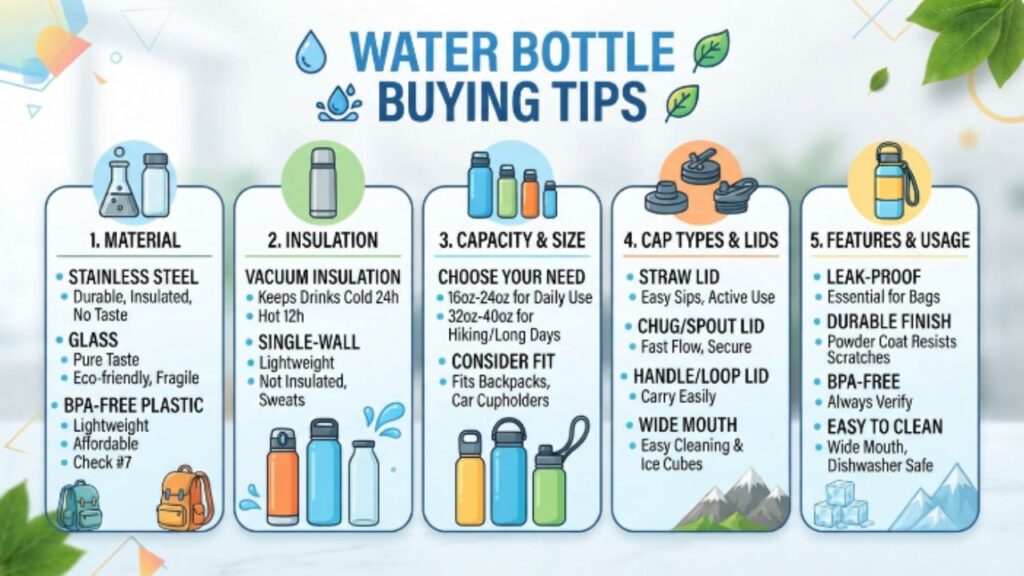
Before purchasing, ask yourself:
- Does it fit my Backpack?
- Will it slide into a Bike bottle holder?
- Does it fit my vehicle’s Cupholder?
- Is the Leak-proof seal dependable?
- Is the bottle comfortable to hold?
- Do I need insulation?
- How often will I refill it?
- Is the size practical for my daily routine?
Those questions save far more disappointment than comparing colors.
Frequently Asked Questions About Water Bottle Dimensions
How tall is a standard water bottle?
Most standard bottles measure around 25 cm (9.8 inches), although larger models can reach 33 cm (13 inches).
What is the standard water bottle diameter?
Most everyday bottles have a diameter between 7 cm and 7.5 cm (2.75–2.9 inches).
Which bottle fits most car cup holders?
Bottles with diameters close to 7 cm generally fit standard Cupholder designs.
Is a stainless steel bottle heavier than plastic?
Yes. A Stainless steel water bottle usually weighs more because thicker walls provide improved Insulation and Temperature retention.
What bottle size is best for daily hydration?
Most adults find 500 ml to 750 ml bottles ideal because they’re portable while supporting regular Water intake and Daily water goals.
read this blog:https://mynoval.com/8-inches-long-2/
Final Thoughts
Choosing the right bottle isn’t really about buying the biggest one. It’s about finding that oddly satisfying balance between Water bottle capacity, Water bottle height, Water bottle diameter, weight, comfort, and the places your bottle needs to fit every single day.
Whether you prefer a lightweight Reusable bottle, an insulated premium companion for long commutes, or a rugged bottle built for Outdoor adventure, understanding water bottle dimensions helps you buy smarter instead of guessing. Funny enough, a centimeter here or there can completely change how useful a bottle feels.
Next time you’re shopping, don’t just check the color or the logo. Look at the dimensions, compare the measurements, and think about where you’ll actually carry it. Your shoulders, backpack, and cup holder might quietly thank you for it.
If you have a favorite bottle size or discovered one that fits perfectly into every pocket and holder imaginable, share your experience in the comments. Someone else is probably standing in a store right now, holding two bottles, wondering which one is the better choice.