

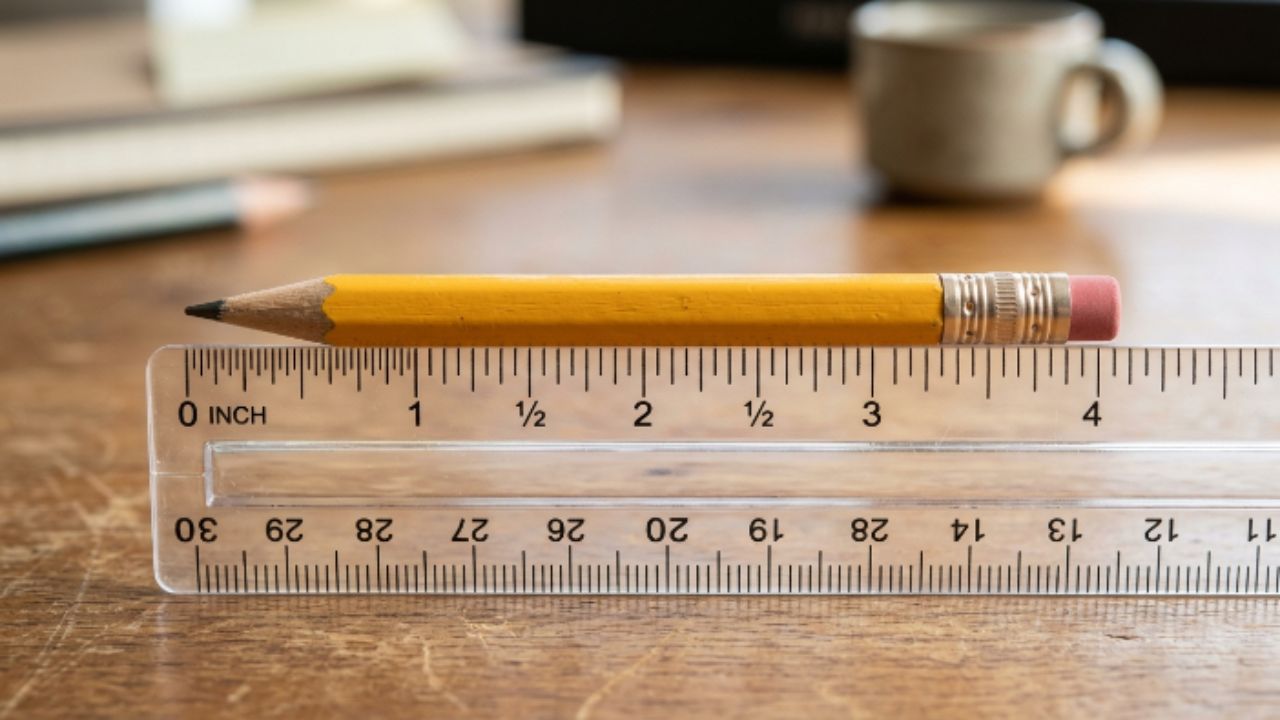
Ever had one of those oddly specific moments where you needed to picture 3 inches, but your ruler had vanished into whatever mysterious place rulers always disappear to? I have. It happened while hanging a tiny picture frame in the hallway. I kept holding my fingers apart, squinting at the wall like somehow it’d answer back. Turns out, our brains aren’t nearly as good at guessing lengths as we think they are. Kinda funny, honestly.
That little moment got me thinking about everyday objects we handle without paying much attention. Some of them are surprisingly close to 3 inches, making them excellent measurement reference tools when no ruler is nearby. Once you start noticing them, it’s hard to stop. Suddenly your wallet, a strawberry, or even your thumb starts looking like a tiny measuring device pretending to be something else.
Understanding 3 inches isn’t only useful for DIY jobs. It helps while shopping online, arranging home décor, spacing plants in the garden, cutting fabric, crafting with kids, or checking whether something will fit inside a drawer. Developing this sort of measurement literacy creates a better instinct for size estimation, and honestly… life gets just a lil bit easier.
In this guide, we’ll explore nine familiar objects that help create a reliable visual measurement, compare their dimensions, explain where they differ from an exact three-inch measurement, and share practical ways to use them as a mental ruler whenever traditional portable measuring tools aren’t within reach.
| Object | Approx. Size | How Close to 3 Inches? |
|---|---|---|
| Business Card (Length) | 3.37 in (85.6 mm) | Slightly longer |
| Large Strawberry | ~3 in | Very close |
| Adult Male Thumb | ~3 in | Very close |
| Folded Wallet (Width) | ~3 in | Close |
| Wine Cork | 2.75–3 in | Close |
| 3 Linked Paper Clips | ~3 in | Approximate |
| Medium Binder Clip | ~3 in | Close |
| Smartphone (Width) | 2.8–3.3 in | Close |
| Golf Tee | 3.25 in | Slightly longer |
Why Understanding 3 Inches Matters
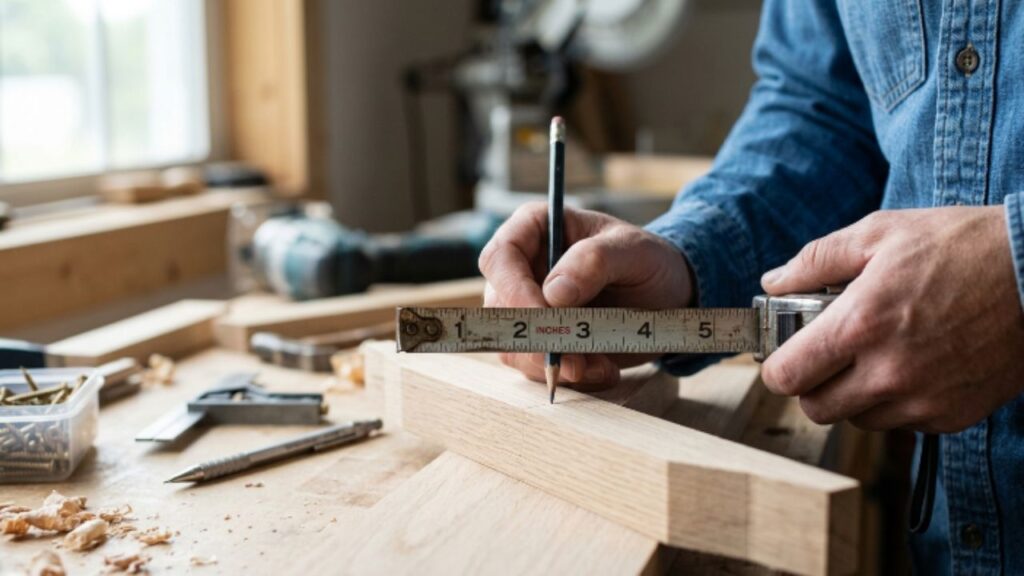
Most people don’t memorize measurements. They remember objects.
That’s why builders, artists, teachers, and even parents often compare sizes with familiar items instead of quoting numbers. Your brain naturally builds a visual reference from real objects rather than abstract figures.
Imagine buying a phone holder online. The product description says the grip opens to 85 mm. Unless you’ve trained yourself to convert measurements in your head, that number doesn’t really mean much. But knowing it’s roughly 3.35 inches, just slightly wider than a typical three-inch object, suddenly makes it easier to imagine.
This ability is called real-world size visualization, and it’s one of the easiest ways to improve your measurement skills without carrying a ruler everywhere.
As educator Uma Reddy once explained during a classroom workshop on practical geometry:
“Children rarely remember numbers first. They remember objects they can hold.”
That simple idea works just as well for adults.
How Long Is 3 Inches?
Before jumping into examples, let’s quickly understand what 3 inches actually equals.
| Measurement | Equivalent |
|---|---|
| Inches | 3 inches |
| Centimeters | Approximately 7.6 centimeters |
| Millimeters | About 76 mm |
| Feet | 0.25 feet |
| Meters | 0.076 meters |
Keep in mind that many everyday objects aren’t exactly three inches. Some measure 2.75 inches, others 3.375 inches, while many simply fall close enough to serve as an approximate measurement.
That’s perfectly fine because we’re using them as a quick measurement reference, not for engineering.
1. A Standard Business Card (Longest Side)
One surprisingly useful example is a business card.
Although the exact dimensions depend on the country, the widely accepted standard following ISO/IEC 7810 places a typical business card around 85.60 mm in length, which equals roughly 3.37 inches.
That’s just a bit longer than three inches, making it an excellent size reference.
People in offices handle business cards almost daily, so they’re among the easiest objects measuring 3 inches to remember.
Common uses include:
- Comparing small electronic gadgets
- Estimating drawer space
- Checking wallet compartments
- Planning shelf decorations
- Visualizing furniture accessories
Whenever someone asks, “How long is 3 inches?” a business card gives you a surprisingly close answer.
2. A Large Strawberry
Nature doesn’t read measuring tapes, yet some fruits come remarkably close.
A particularly large strawberry often measures around 3 inches from tip to stem. According to references from the California Strawberry Industry, premium strawberries commonly reach this size during peak harvest seasons.
No two strawberries are identical, of course. Some barely reach 2.75 inches, while oversized varieties exceed 3.375 inches.
Still, they’re excellent for teaching children measurement literacy because everyone immediately understands what a strawberry looks like.
My neighbor Aunt Salima once laughed while baking.
“This strawberry is bigger than my grandson’s toy car!”
She wasn’t far off.
3. An Adult Male Thumb
Your own body can become a measuring tool.
An average adult male thumb, measured from the base to the tip, often approaches 3 inches, though individual differences naturally exist.
This makes the thumb one of the oldest forms of human-centered measurement.
Before modern rulers became common, craftspeople regularly estimated dimensions using:
- Thumb length
- Palm width
- Fingers
- Hand span
It’s not perfectly accurate, but it’s amazingly practical when doing quick DIY projects.
Using body references improves measurement without ruler techniques because your hands are always available.
4. A Wallet Width
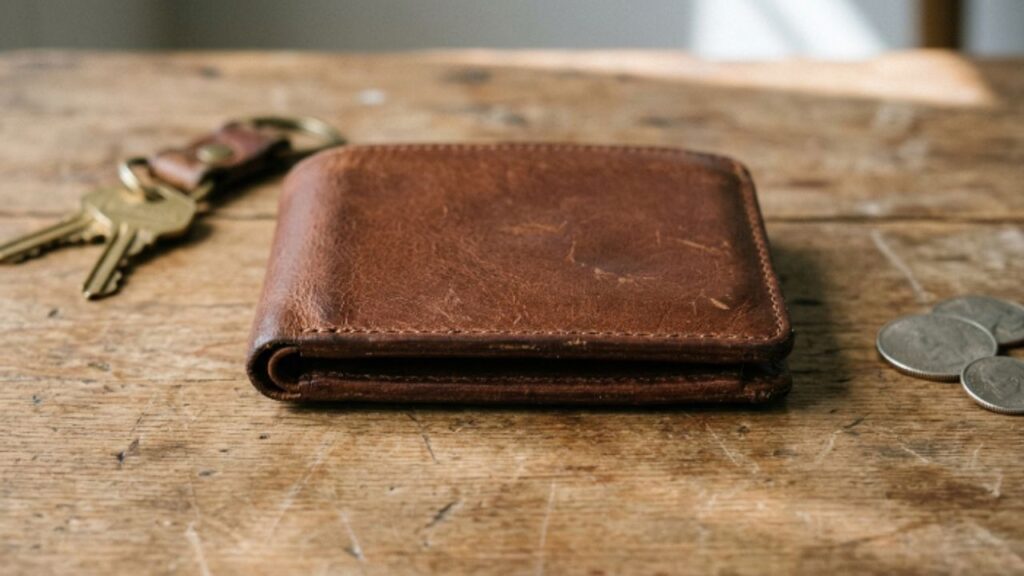
Many slim wallets measure close to 3 inches across when folded.
While larger wallets vary considerably, compact leather wallets often provide a handy visual comparison.
This becomes useful when:
- Shopping online
- Comparing pocket sizes
- Estimating handbag storage
- Planning travel accessories
If product listings mention product dimensions, picturing your wallet instantly gives context.
5. A Wine Cork
A traditional wine cork measures close to 2.75 to 3 inches, depending on the bottle and manufacturer.
They’re surprisingly useful in arts and crafts.
People use corks for:
- Cork crafts
- Bulletin board projects
- Decorative spacing
- Plant labels
- Home décor
Craft enthusiasts often keep jars filled with corks, accidentally collecting dozens of tiny measuring references at the same time.
Funny how that works.
6. A Chain of Paper Clips
One paper clip isn’t three inches.
Several linked together are.
Three medium paper clips connected end-to-end usually stretch close to 3 inches, making them useful in offices where rulers somehow disappear every Tuesday… or at least it feels that way.
Office workers frequently rely on improvised tools.
These include:
- Paper clips
- Binder clips
- Sticky notes
- Business cards
They’re all examples of everyday office supplies becoming accidental measuring devices.
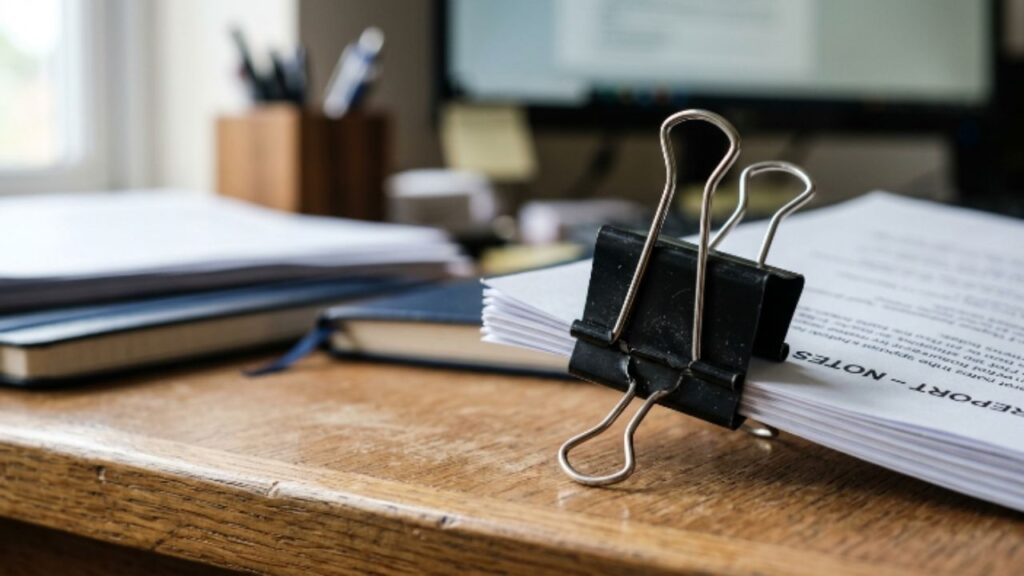
7. A Medium Binder Clip
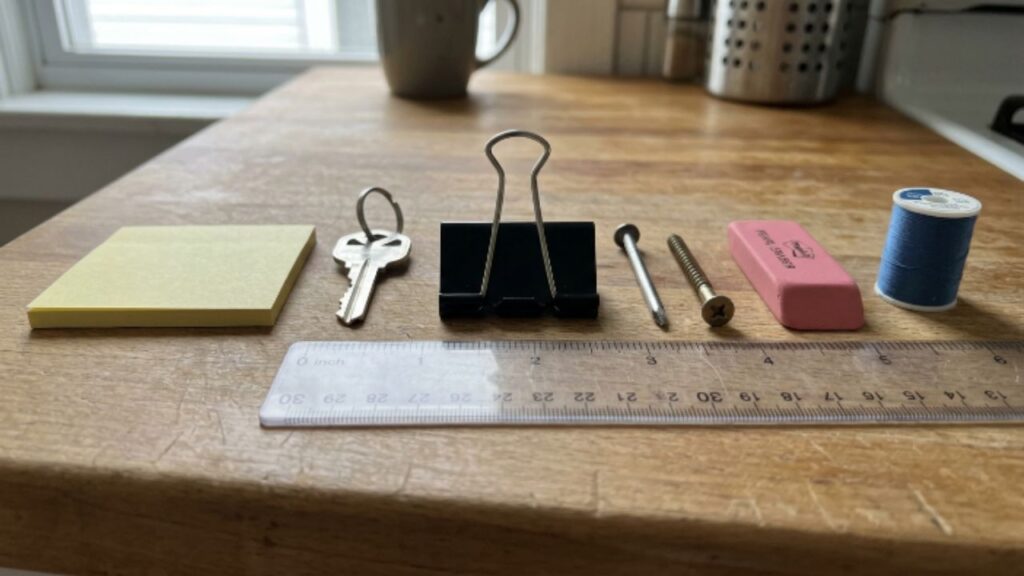
A medium binder clip measures roughly three inches across its widest point including the handles when opened.
Because binder clips are standardized office products, they offer a consistent measurement guide.
Teachers often use them during classroom demonstrations involving:
- Length
- Width
- Thickness
- Scale
- Dimension
Students usually remember objects better than numbers.
It’s weirdly comforting, actually.
8. A Smartphone Width
Many modern smartphones measure close to 3 inches across.
Not every phone does.
Compact models fall nearer 70 mm, while larger devices approach 85 mm.
Knowing your phone’s approximate width becomes useful when checking:
- Phone accessories
- Cases
- Holders
- Car mounts
- Storage compartments
If an online listing mentions 85 mm, you’ll already have a pretty decent idea of what that means.
This kind of product size comparison helps avoid buying accessories that don’t fit.
9. A Golf Tee
Golf tees come in multiple lengths.
The popular 3.25-inch version is only slightly longer than 3 inches, making it another practical comparison object.
They’re especially handy for:
- Gardening
- Plant spacing
- Craft projects
- Outdoor games
- Marking temporary measurements
Because golf tees are lightweight and inexpensive, some DIY hobbyists even keep one in their toolbox as a quick measurement hack.
Other Things Close to 3 Inches
Not every useful reference had room in our top nine list.
Other familiar common household objects include:
- Small decorative items
- Compact tool grip handles
- Picture frame edges
- Craft board pieces
- Shelf brackets
- Small kitchen gadgets
- Decorative shelf supports
- Fabric samples
Each helps improve your dimensional awareness over time.
How to Measure 3 Inches Without a Ruler
People often search:
What is 3 inches long?
Or:
How to measure 3 inches without a ruler?
Here are practical methods.
- Compare with a large strawberry.
- Use your adult thumb as a rough guide.
- Picture a folded wallet width.
- Imagine a business card that’s slightly longer than three inches.
- Link several paper clips together.
- Compare with your smartphone width.
- Use a golf tee.
- Estimate using a wine cork.
- Keep one familiar object nearby as your regular portable measuring reference.
These techniques aren’t laboratory accurate.
But they’re surprisingly reliable for everyday measurements.
Using Three-Inch References Around the House
The more you practice, the faster your brain develops a dependable mental ruler.
Here are everyday situations where it helps.
Home Improvement
Spacing a decorative shelf, checking wall studs, or estimating clearance becomes easier when you already recognize a three-inch gap.
Interior Design
Need equal spacing between a picture frame and another decoration?
A remembered three-inch reference works surprisingly well.
My friend Amir once eyeballed every frame in his apartment using nothing more than his phone’s width. We measured afterward, expecting disaster. Most were only a few millimeters off. Lucky? Maybe. Useful? Definitely.
Gardening
Plant labels, seed spacing, and young herb placement often recommend several inches of separation.
Understanding distance visually speeds everything up.
Craft Projects
Whether cutting fabric, assembling a bulletin board, or trimming foam board, knowing what approximately 3 inches looks like reduces mistakes.
Shopping Online
Reading product specifications becomes much easier when you instantly picture the listed object dimensions.
Instead of wondering what 53.98 mm, 55 mm, or 85 mm looks like, your brain starts comparing them with familiar objects.
Why Approximate Measurements Are Good Enough
Not every task needs perfection.
Building a bridge?
Absolutely use a precision ruler.
Wrapping a gift?
Estimating shelf space?
Checking whether a gadget fits your backpack?
An approximate measurement usually saves time without sacrificing results.
Professional carpenters often estimate first and verify second.
Artists sketch before measuring.
Designers visualize before calculating.
That tiny gap between instinct and precision is where practical measurement approximation becomes genuinely useful.
Frequently Asked Questions
What objects are 3 inches long?
Some of the best examples include a large strawberry, an adult male thumb, a folded wallet, a wine cork, several linked paper clips, a smartphone width, a golf tee, and the long side of a business card.
Is 3 inches equal to 7.6 centimeters?
Yes. 3 inches equals approximately 7.6 centimeters or about 76 millimeters.
Can I estimate 3 inches accurately without a ruler?
Yes. Familiar objects make excellent visual size reference tools. While they won’t replace precise instruments, they’re usually accurate enough for daily tasks.
Why do measurements vary between similar objects?
Manufacturers use different designs, and natural objects like strawberries vary in size. That’s why these examples are intended as size estimation aids rather than exact standards.
Why is learning visual measurements useful?
Developing measurement literacy makes shopping, crafting, decorating, gardening, and home improvement much easier because you can estimate dimensions quickly without constantly reaching for a ruler.
read this blog:https://mynoval.com/8-inches-long-2/
Final Thoughts
Learning what 3 inches looks like isn’t really about memorizing numbers. It’s about building confidence in your everyday decisions. Once your eyes become familiar with common references, estimating small distances begins to feel almost automatic. You stop guessing wildly and start recognizing patterns hiding in plain sight.
Whether you’re arranging a gallery wall, checking the fit of a new gadget, spacing herbs in the garden, or comparing online product dimensions, these objects that are 3 inches long provide a practical and memorable visual reference. Little by little, your sense of scale becomes sharper, and that’s a skill that quietly pays off more often than most people realize.
The next time someone asks, “How long is 3 inches?” you probably won’t reach for a ruler first. You’ll remember a business card, a large strawberry, your thumb, or even your smartphone and chances are, you’ll be surprisingly close. If you have another clever everyday measurement reference or personal measurement hack, share it with others. The best measuring tools aren’t always the ones marked with numbers; sometimes they’re the ordinary things already sitting right in front of us.