

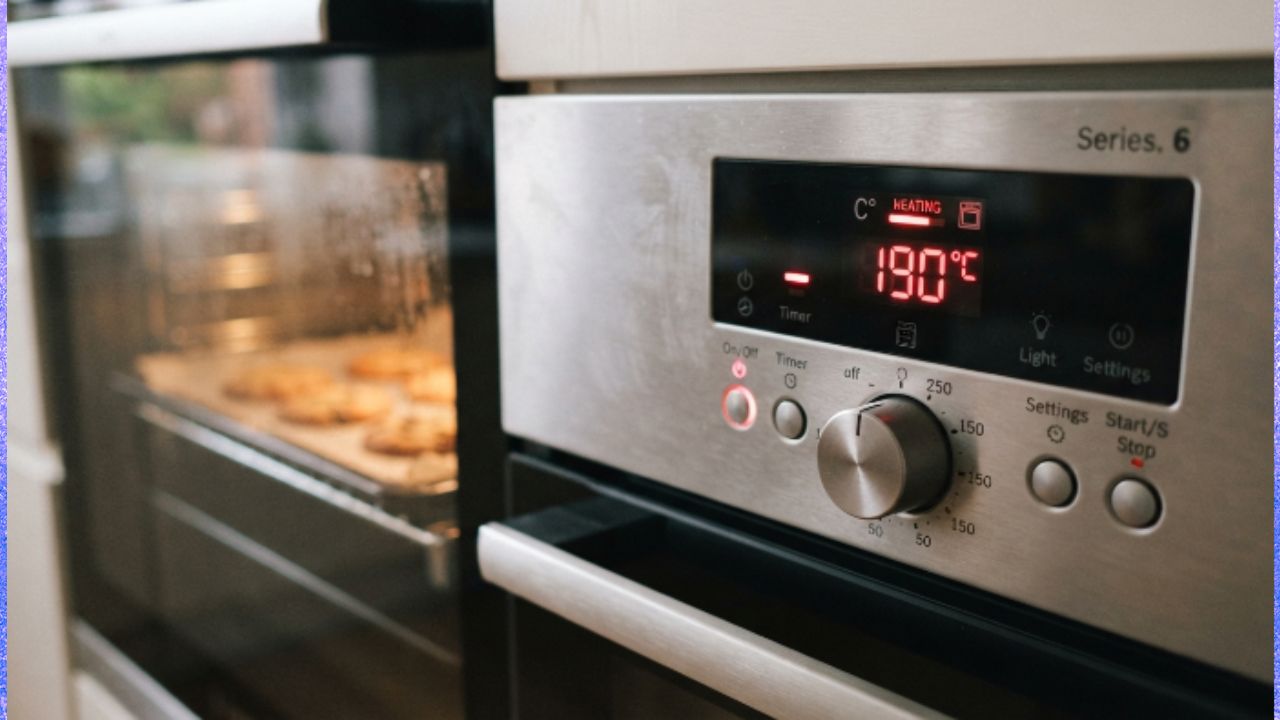
There’s something almost funny about how a little number on an oven dial can suddenly become a tiny mystery. You’re standing in the kitchen, recipe open, flour on the counter, maybe one sock somehow missing from your foot, and the instructions say 190°C. Your oven, meanwhile, is speaking fluent Fahrenheit. Now what?
The good news is that 190 degrees Celsius is very easy to convert. 190°C equals 374°F. That’s the whole answer, though the journey to it is useful if you regularly cook from international recipes or simply want to understand temperature conversion without reaching for a calculator every single time.
So, if you have ever searched 190c to f, 190 celsius to fahrenheit, or wondered “what is 190°C in Fahrenheit?”, you’ve landed in the right little corner of the internet. Let’s turn that number into something practical, visual, and actually memorable.
| Celsius | Fahrenheit |
|---|---|
| 190°C | 374°F |
| Oven setting | 375°F (approx.) |
| Formula | (190 × 9/5) + 32 |
| Result | 374°F |
What Is 190 Degrees Celsius in Fahrenheit?
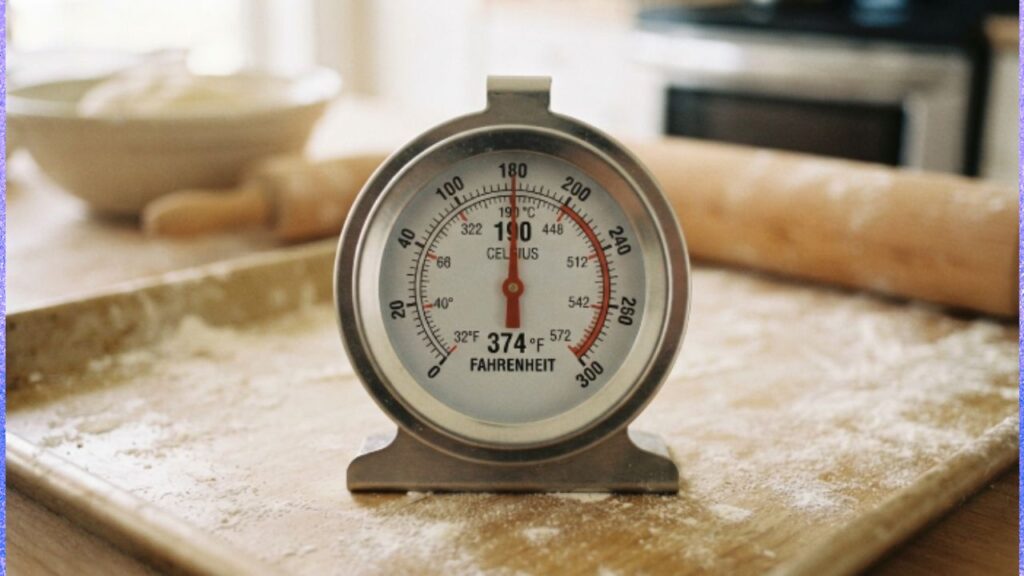
The direct answer is:
190 degrees Celsius = 374 degrees Fahrenheit
In symbols:
190°C = 374°F
So, when a recipe says to preheat your oven to 190°C, a Fahrenheit oven should generally be set to 374°F.
That said, many household ovens don’t offer every single degree on the oven dial. You may see settings such as 350°F, 375°F, or 400°F rather than 374°F. In that situation, 375°F is normally the convenient rounded setting and is only 1°F away from the exact conversion. Thats close enough for most everyday baking and roasting situations.
How Do You Convert 190 Degrees Celsius to Fahrenheit?
The standard Celsius to Fahrenheit formula is:
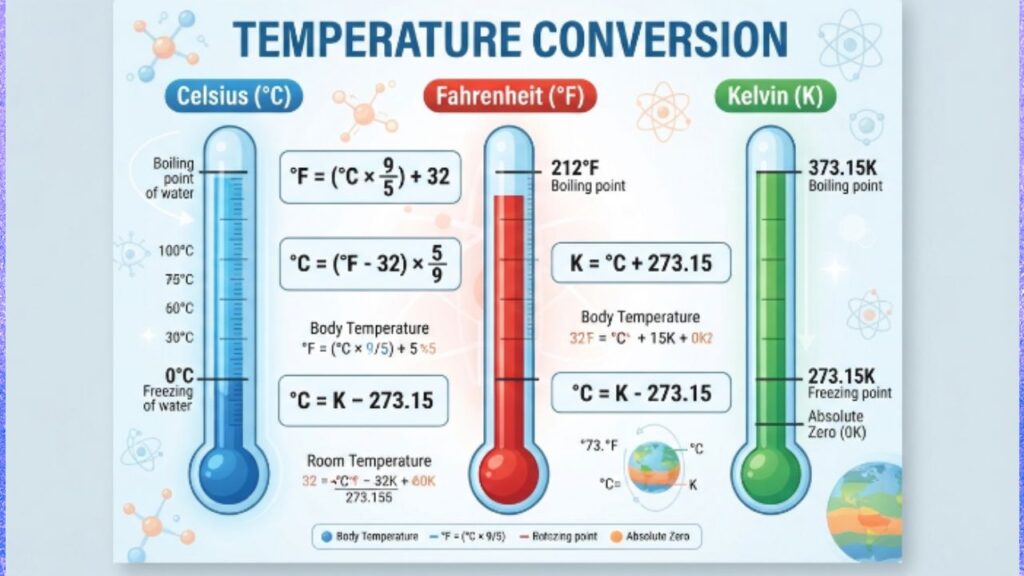
°F = (°C × 9/5) + 32
Now put 190 into the equation:
°F = (190 × 9/5) + 32
First, multiply 190 by 9:
190 × 9 = 1,710
Then divide by 5:
1,710 ÷ 5 = 342
Finally, add the +32 offset:
342 + 32 = 374
And there we have it:
190°C = 374°F
It looks a bit more dramatic written as an equation than it actually is. Once you’ve done the conversion a few times, your brain starts recognising these temperatures almost like familiar faces at a grocery store.
190°C to °F: The Quick Conversion
If you’re in a hurry and your cake batter is already sitting there looking impatient, remember this:
| Celsius | Fahrenheit |
|---|---|
| 190°C | 374°F |
| 180°C | 356°F |
| 200°C | 392°F |
| 210°C | 410°F |
| 220°C | 428°F |
For practical oven use, 190°C is usually treated as approximately 375°F.
This is why recipes may sometimes list 190°C / 375°F together. The Fahrenheit value has simply been rounded for convenience.
Why Do Celsius and Fahrenheit Give Different Numbers?
The difference comes from the fact that Celsius and Fahrenheit are two different temperature scales. They measure the same physical thing temperature but they use different numerical reference systems.
The Celsius scale is widely used around the world and is associated with the metric system and the International System of Units (SI). Fahrenheit remains common in the United States, where temperatures are often given in the U.S. customary system.
Water provides a useful example. Its freezing point of water is:
0°C = 32°F
And its boiling point of water at standard atmospheric pressure is:
100°C = 212°F
So the scales aren’t simply shifted by a fixed number. They also use different intervals, which is why the conversion needs both the 9/5 conversion factor and the 32-degree offset.
It’s a little like two people measuring the same hallway with different rulers. The hallway hasn’t changed. Their numerical descriptions have.
The Celsius to Fahrenheit Formula Explained Simply
The conversion formula can look scarier than it is.
°F = (°C × 9/5) + 32
There are really only two moves:
- Multiply the Celsius number by 9/5
- Add 32
For 190 Celsius to Fahrenheit:
190 × 9/5 = 342
Then:
342 + 32 = 374°F
So if someone asks you how to convert 190°C to °F, thats the method.
For comparison, the reverse conversion uses the Fahrenheit to Celsius formula:
°C = (°F − 32) × 5/9
You subtract 32 first, then multiply by 5/9. It looks like the Celsius formula walking backwards through the same doorway.
Is 190°C the Same as 374°F?
Yes. 190°C is exactly equal to 374°F under the standard Celsius-to-Fahrenheit conversion.
For an oven, however, you might set the temperature to 375°F because household oven controls often work in rounded increments.
That tiny 1°F difference is generally insignificant for ordinary recipes. Ovens themselves can fluctuate during heating, and their displayed temperature isn’t always perfectly identical to the actual temperature inside.
This is one reason a reliable oven thermometer can be more useful than obsessing over whether the dial says 374°F or 375°F.
What Is 190°C in Fahrenheit for Baking?
For 190°C baking temperature, the Fahrenheit equivalent is 374°F, commonly rounded to 375°F.
This is a moderately high oven temperature and can work beautifully for a wide range of recipes. Depending on the recipe, you may encounter this setting for things such as roasted vegetables, baked chicken, pastries, cakes, potatoes, and other dishes that need substantial heat without immediately becoming a charcoal-based art project.
Some recipes from Italy, France, Japan, and other countries use Celsius because Celsius is the standard in many parts of the world. If you’re following recipes from abroad, converting the oven temperature is one of those tiny practical skills that makes international cooking much easier.
What Can You Cook at 190°C?
A 190°C oven temperature can be useful for many everyday foods, although the exact temperature should always follow the specific recipe.
Roasted Vegetables
At around 190°C, vegetables can develop browned edges while remaining tender inside. Potatoes, carrots, peppers, cauliflower, zucchini, and similar vegetables can all work well at this general temperature.
A little oil, seasoning, enough space on the tray, and suddenly the humble vegetable has developed an ego.
Chicken Bake
Many chicken recipes use oven temperatures around this range. The important thing isn’t just the oven setting, though. Food safety depends on the food reaching an appropriate internal temperature, especially with poultry.
A recipe’s recommended cooking time and internal temperature should both be followed rather than relying only on the oven dial.
Homemade Bread
Some bread recipes bake around 190°C, while others use considerably hotter ovens. Bread is wonderfully particular like that.
The right baking temperature depends on the style, dough, size, hydration, and desired crust.
Cookies and Brownies
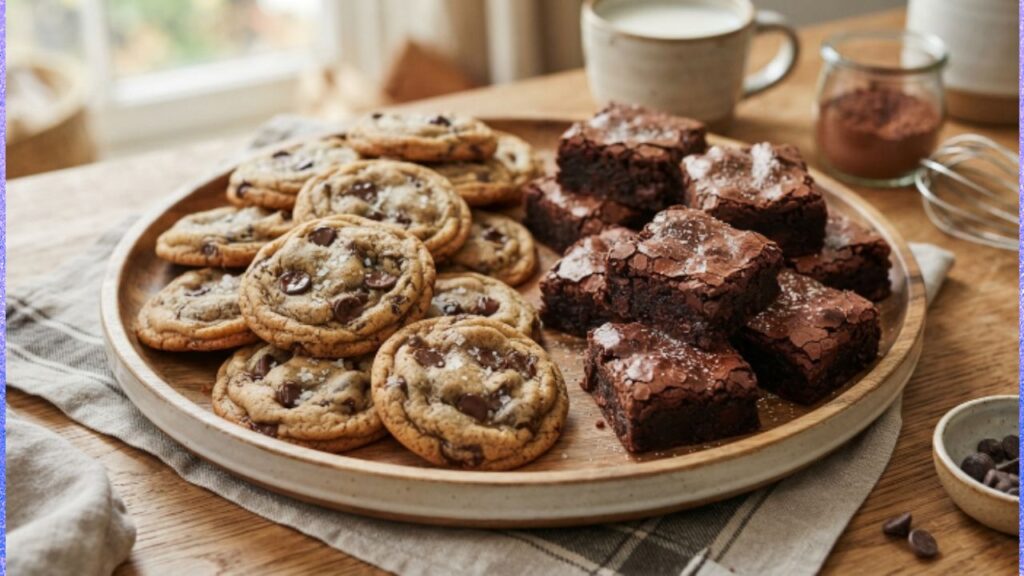
Certain cookies and brownies can be baked around this temperature, although many recipes use lower temperatures. Always check the recipe because a few minutes and a slightly different temperature can change texture quite dramatically.
A soft brownie and a dry brownie may have started with exactly the same ingredients. The oven sometimes gets the final vote.
190°C Roasting Temperature: Is It High?
Yes, 190°C is a fairly hot oven temperature, but it isn’t an extreme setting.
For reference:
| Oven Temperature | Approx. Fahrenheit | General Use |
|---|---|---|
| 150°C | 302°F | Slow baking |
| 160°C | 320°F | Gentle baking |
| 170°C | 338°F | Moderate baking |
| 180°C | 356°F | Common baking |
| 190°C | 374°F | Baking and roasting |
| 200°C | 392°F | Hot baking/roasting |
| 220°C | 428°F | High-heat cooking |
This makes 374°F oven temperature a useful middle-to-high cooking setting. It has enough heat for browning and roasting while remaining below the temperatures commonly associated with very high-heat baking.
Why Oven Temperature Accuracy Matters
Your oven may claim to be at 190°C while the actual internal temperature wanders above or below that number. This isn’t necessarily a disaster. Domestic ovens cycle their heating elements on and off to maintain an approximate temperature.
But if your cakes consistently collapse, cookies burn on one side, or roasted food takes mysteriously forever, an oven thermometer may reveal what’s really happening.
A simple thermometer can help identify whether your oven is running hot or cool. This matters more than people sometimes realise, especially with delicate baking temperature requirements.
A recipe isn’t merely suggesting a decorative number. Temperature influences browning, moisture loss, texture, chemical reactions, and cooking speed.
190°C vs. 375°F: Which One Should You Use?
If your recipe says 190°C and your oven uses Fahrenheit, choose 375°F.
The exact mathematical conversion is 374°F, but 375°F is the practical rounded equivalent used by many recipes and oven controls.
Think of it this way:
Exact conversion: 190°C = 374°F
Practical oven setting: 190°C ≈ 375°F
That little distinction prevents unnecessary confusion. You don’t need to stare at your oven wondering where the mysterious 374°F button went. It probably doesn’t exist, and your dinner will be fine.
Common Searches for 190 Celsius Fahrenheit Conversion
People phrase this conversion in all sorts of ways, but they’re usually asking the same thing.
You may have searched:
- 190c to f
- 190 celsius to fahrenheit
- 190° celsius to fahrenheit
- 190 to fahrenheit
- 190°C in Fahrenheit
- convert 190 Celsius to Fahrenheit
- 190 Celsius Fahrenheit conversion
- what is 190 degrees Celsius in Fahrenheit
- how much is 190 Celsius in Fahrenheit
- what temperature is 190°C in an oven
All of these lead to the same essential answer:
190°C = 374°F, or about 375°F for a typical oven setting.
The wording changes. The thermometer remains unimpressed.
Celsius vs. Fahrenheit: A Simple Reference
Understanding a few common reference points makes temperature measurement much easier.
| Celsius | Fahrenheit |
|---|---|
| 0°C | 32°F |
| 10°C | 50°F |
| 20°C | 68°F |
| 30°C | 86°F |
| 40°C | 104°F |
| 100°C | 212°F |
| 180°C | 356°F |
| 190°C | 374°F |
| 200°C | 392°F |
These values can be saved as a small temperature chart or kitchen reference. Some people even keep conversion notes on sticky notes near the oven, which is honestly more useful than trying to remember every number while holding a hot baking tray.
A Handy Temperature Conversion Trick
If you need to convert Celsius to Fahrenheit often, the exact formula is always your safest option:
°F = (°C × 9/5) + 32
For quick mental estimates, you can sometimes double the Celsius temperature and add roughly 30. This isn’t exact, but it gives a rough idea.
For 190°C:
190 × 2 = 380
380 + 30 = 410°F
That’s noticeably higher than the actual 374°F, so this shortcut becomes pretty rough at higher temperatures. For serious cooking, baking, or scientific measurement, use the proper equation or a reliable temperature conversion calculator instead.
Using an Online Temperature Calculator
A temperature calculator or online calculator is handy when you’re converting many values.
An interactive conversion tool can instantly change Celsius into Fahrenheit and vice versa, saving time when working through an international recipe, laboratory notes, schoolwork, or a long temperature conversion chart.
Still, knowing the formula is worthwhile. Tools can disappear, websites can load slowly, and sometimes you’re standing in a kitchen with flour on your hands and absolutely no interest in opening six browser tabs.
The formula is simple enough to keep in your mental toolbox.
Why 190°C Matters in International Cooking
Food has never cared much about national borders. A French pastry can appear in a Pakistani kitchen, an Italian recipe can be cooked in Canada, Japanese baking techniques can be followed in the United States, and suddenly Celsius and Fahrenheit are sitting together at the dinner table.
This is why international cooking makes temperature conversion useful.
Recipes often preserve the temperature system familiar to their original audience. A cookbook written in Europe may use Celsius, while an American cookbook commonly uses Fahrenheit.
Understanding metric vs imperial temperature removes one small barrier between you and recipes from almost anywhere.
And honestly, thats a pretty good reason to know that 190°C equals 374°F.
What About 190°F in Celsius?
Don’t accidentally reverse the numbers.
If you’re asking about 190°F to Celsius, that’s a different conversion.
Use:
°C = (°F − 32) × 5/9
So:
°C = (190 − 32) × 5/9
°C = 158 × 5/9
°C = 87.8°C
Therefore:
190°F ≈ 87.8°C
This is dramatically cooler than 190°C. Mixing these two values up in a recipe could lead to undercooked food, so it’s worth paying attention to which scale the recipe uses.
Common Mistakes When Converting Temperatures
One common mistake is forgetting the +32 offset. Multiplying 190 by 9/5 gives 342, but 342°F is not the final answer. You still need to add 32.
Another mistake is using the reverse formula in the wrong direction. Celsius-to-Fahrenheit and Fahrenheit-to-Celsius look related, but the order of operations matters.
A third mistake happens in the kitchen: people sometimes confuse oven temperature with the internal temperature that food needs to reach. These aren’t the same thing. An oven may be set to 190°C, while a chicken’s safe internal temperature is a completely different measurement.
And finally, don’t assume every oven is perfectly calibrated. Oven accuracy varies, and an inexpensive thermometer can sometimes explain a surprisingly mysterious baking history.
Quick Answer: 190°C to Fahrenheit
If you only came here for the answer, here it is without the mathematical parade:
190 degrees Celsius = 374 degrees Fahrenheit.
For most ovens, set the dial to approximately:
375°F
The exact conversion comes from:
°F = (190 × 9/5) + 32 = 374°F
So if a recipe asks for 190°C oven temperature, 375°F is the practical Fahrenheit setting.
FAQs About 190°C to Fahrenheit
1. What is 190°C in Fahrenheit?
190°C equals 374°F. For most ovens, you can simply set the temperature to 375°F.
2. How do you convert 190°C to Fahrenheit?
Use the formula °F = (°C × 9/5) + 32. For 190°C, the result is 374°F.
3. Is 190°C the same as 375°F?
Almost. The exact conversion is 374°F, but 375°F is the practical rounded oven setting.
4. What is 190°C in Fahrenheit for baking?
For baking, 190°C is about 375°F. This is a moderately high oven temperature suitable for many baking and roasting recipes.
5. Is 190°C a high oven temperature?
Yes, 190°C (374°F) is considered a moderately high oven temperature and is commonly used for baking, roasting vegetables, and cooking various dishes.
Read This Blog:https://mynoval.com/what-time-was-it-7-hours-ago-find-out-instantly/
Final Thoughts on 190 Celsius to Fahrenheit
Temperature conversion can feel like one of those tiny everyday puzzles that shouldn’t require any thought, yet somehow does. A recipe says 190°C, your oven says Fahrenheit, and suddenly you’re negotiating with numbers before breakfast.
But once you know that 190°C = 374°F, the mystery mostly disappears.
Remember the two reference points: 0°C equals 32°F, the freezing point of water, while 100°C equals 212°F, its boiling point under standard conditions. Between those familiar landmarks sits our useful kitchen number: 190°C, or 374°F.
For practical baking and roasting, 375°F is usually the setting you’ll want when converting 190°C to Fahrenheit.
Keep a small kitchen reference chart nearby if you cook from international recipes often. Use an oven thermometer when accuracy matters. And when in doubt, use the actual conversion formula rather than trusting a half-remembered number from somewhere in the foggy basement of your brain.
So the next time you see 190°C printed in a recipe, don’t panic, don’t squint at the oven dial, and definitely don’t abandon the brownies.
Just remember:
190°C = 374°F ≈ 375°F
A small conversion, yes but sometimes small numbers are the ones that get dinner safely into the oven.