


There is a funny little moment before a party when everybody suddenly becomes a mathematician: “How many pizzas should we get?” Nobody wants to be the person who orders three too many, but nobody wants the last guest staring sadly at an empty pizza box either. A good pizza calculator takes that guessing game and makes it much easier, even if your group has wildly different appetites.
And honestly, pizza has a strange way of turning an ordinary gathering into something memorable. Whether you’re celebrating a birthday party, watching the big game, arranging a family picnic, or simply feeding friends on a Friday night, the right amount of Pizza can make the whole thing feel smoother. You don’t need to panic over every slice, you just need a sensible estimate and maybe one extra pizza for those mysteriously hungry guests.
| Guests | Pizzas Needed |
|---|---|
| 5 | 2–3 |
| 10 | 4–5 |
| 15 | 5–7 |
| 20 | 8–10 |
| 25 | 9–12 |
| 30 | 11–14 |
| 40 | 15–18 |
| 50 | 19–23 |
What Is a Pizza Calculator?

A pizza calculator is basically a quick food quantity calculator that estimates how many pizzas you’ll need based on the number of guests, their ages, appetite, and the size of the pizzas. It can help answer questions like “how many pizzas do I need?” without requiring a degree in pizza mathematics, which thankfully isn’t a real degree.
Most basic calculations start with pizza slices per person. A common planning rule is around 3 slices per adult and 2 slices per child. Since many pizzas come with about 8–10 slices per pizza, you can then work backward to find the number of pizzas needed. This is only a starting point, though, because a hungry teenager and someone nibbling one slice with a salad are clearly not the same customer.
How the Pizza Calculator Works
The easiest pizza serving calculator begins with your guest count. Separate your adults and children, estimate how many slices each person may eat, then compare that total with the number of slices per pizza. It sounds very serious written down, but in practice it takes less than a minute.
For a simple example, imagine you have 5 adults. At 3 slices per adult, you would plan for about 15 slices. If each pizza has 8 slices, you need roughly 2 pizzas, with a little wiggle room. If everyone is especially hungry, though, ordering 3 pizzas would be the safer move.
A more flexible pizza order calculator should also consider the hunger level, the occasion, and whether other foods are being served. Pizza is usually the main attraction at dinner, but at lunch with Salad, Breadsticks, Drinks, and Desserts, people may eat noticeably less. Pizza math gets weird when cake enters the room.
Basic Pizza Formula for Adults and Children
One useful planning rule is 3 slices per adult and 2 slices per child. You can estimate your total slices like this:
Adults × 3 + Children × 2 = estimated pizza slices
Then divide the estimated slices by the number of slices in each pizza. If your pizzeria cuts a pizza into 8 slices, divide by 8 and round upward. Don’t round downward just because the number looks nicer, because hungry guests have absolutely no sympathy for your spreadsheet.
For example, suppose your gathering has 10 adults and 5 children. That gives you 30 slices for adults and 10 slices for children, or 40 slices altogether. With 8 slices per pizza, you’d need about 5 pizzas. This pizza ratio works well for many ordinary gatherings, although appetite and pizza size can change the answer quite a bit.
Understanding the 3/8 Pizza Formula
You may also come across a 3/8 pizza formula, sometimes written as 3a/8, when people are estimating pizzas based on three slices per adult and eight slices per pizza. The idea is straightforward: multiply the number of adults by three, then divide by eight.
So if there are 16 adults, the rough calculation is 16 × 3 ÷ 8, which equals 6 pizzas. The formula isn’t a magical law of pizza physics, of course. A deep dish pizza, a very thin crust, or an especially hungry group can change things fast.
Pizza Calculator by Number of Guests
The guest count is probably the easiest way to start your pizza party calculator. The following estimates assume about 3 slices per adult, 2 slices per child, and roughly 8 slices in a pizza. Your local Pizzeria may cut pizzas differently, so check before ordering.
| Guests | Approximate Pizza Need |
|---|---|
| 5 guests | 2–3 pizzas |
| 10 guests | 4–5 pizzas |
| 15 guests | 5–7 pizzas |
| 20 guests | 8–10 pizzas |
| 25 guests | 9–12 pizzas |
| 30 guests | 11–14 pizzas |
| 40 guests | 15–18 pizzas |
| 50 guests | 19–23 pizzas |
These numbers are deliberately ranges rather than rigid answers. If you’re serving lots of Salad, snacks, Cake, and Drinks, you can usually stay toward the lower end. If pizza is basically the entire meal, the upper end becomes more sensible, specially when the group includes teenagers.
How Many Pizzas for 10 People?
For 10 people, around 4 to 5 standard pizzas is a comfortable starting point if pizza is the main meal. If the group contains mostly adults, 4 pizzas may be enough for moderate appetites, while 5 gives you a better safety cushion.
For a pizza order for 10 people, think about whether these guests are eating lunch or dinner. Dinner usually deserves a little more food, while a lunchtime gathering with side dishes can need less. And if somebody says, “I only want one slice,” don’t trust that statement too much until the pizza actually arrives.
How Many Pizzas for 20 Guests?
For 20 guests, approximately 8 to 10 pizzas is a useful estimate when using standard pizzas and average appetites. A mixed group of adults and children may need less than 20 adults who are arriving hungry after a long day.
When planning how many pizzas for 20 guests, also think about toppings. If everyone wants different flavors, having more pizzas with varied toppings can work better than ordering fewer pizzas that nobody really likes. A pizza that sits untouched because it has anchovies is technically food, but it isn’t exactly successful pizza planning.
How Many Large Pizzas for 50 People?
For 50 people, the answer depends heavily on the actual diameter and slice count of your large pizza. As a rough estimate, around 19–23 standard 8-slice pizzas could feed a large group with average appetites.
For a pizza order for 50 people, however, don’t simply click “large” 20 times without checking serving information. Some restaurants have huge large pizzas, while others are not nearly as generous. Ask the pizzeria about large pizza servings, slice count, and diameter before placing a large-volume pizza order.
Choosing the Right Pizza Size
Pizza size matters more than people sometimes realize. A small pizza, medium pizza, large pizza, and extra-large pizza aren’t just different names; their surface areas can be surprisingly different.
A 14-inch pizza, for example, has considerably more pizza than a 10-inch pizza, even though the diameter difference doesn’t sound dramatic. That’s because you’re comparing circular areas, not straight-line lengths. Your stomach unfortunately doesn’t care about geometry, but your wallet probably does.
Small Pizza Servings
A small pizza is often useful for one hungry person or two light eaters, depending on its diameter and slice count. It’s also handy when everyone wants a completely different set of pizza toppings, because you can order several small flavors without creating a mountain of leftovers.
For a child-focused event, small pizzas may be convenient because they reduce waste and make portions easier to manage. Still, check the pizzeria’s actual serving guide, since “small” can mean surprisingly different things from one restaurant to another.
Medium Pizza Servings
A medium pizza often works nicely for a couple of people or a small family, although serving size depends on the restaurant. Medium pizzas are a practical choice for family gathering meals where you want a few flavors without ordering enormous quantities.
If you’re using a pizza quantity calculator, enter the actual number of slices rather than assuming every medium has eight. Some places cut them into 6, 8, or even 10 slices, which can make your estimate wobble a bit.
Large Pizza Servings
A large pizza is usually the workhorse of parties. It gives you enough portions to feed several people and often offers better value through pizza deals. For a larger gathering, compare the diameter and price instead of choosing purely by the word “large.”
The smart question isn’t only “How many large pizzas?” but also “How much pizza am I getting for each dollar?” Sometimes two large pizzas provide more food than three mediums, while in another restaurant the difference may be much smaller.
Extra-Large Pizza Servings
An extra-large pizza can be excellent for a big group when the pizzeria offers generous portions. It can reduce the number of boxes and make pizza pickup less chaotic, which sounds like a tiny thing until you’re carrying twelve pizza boxes through a crowded doorway.
However, extra-large pizzas can become awkward if your group wants lots of different toppings. One huge meat-heavy pizza doesn’t help much when half the guests want vegetables or gluten-free pizza.
Pizza Calculator for Adults and Children
An adults and children pizza calculator should treat these groups differently because their typical serving sizes are not identical. The common guideline of 3 slices per adult and 2 slices per child gives you a practical baseline, but it should never be treated as a strict rule.
For example, a group of 8 adults and 8 children might need around 40 slices using the basic estimate. At 8 slices per pizza, that’s 5 pizzas. If it’s a birthday event with Cake, snacks, and drinks, you might find that 5 pizzas are plenty, while a dinner without sides could justify an extra pizza.
Adjusting for Hunger Level

The hunger level of your group can completely change your pizza estimate. People coming straight from work may eat more than guests attending a casual afternoon gathering where everyone has already snacked.
Hungry teenagers deserve special attention here. A teenager birthday can disappear through pizza remarkably quickly, almost like the slices have developed tiny legs. For these groups, adding 10–20% more food can be a sensible precaution.
Crust Type Changes the Calculation
Your pizza crust type also matters. A traditional crust gives you a familiar balance of bread and toppings, while thin crust may allow some guests to eat more slices because each slice feels lighter.
A deep dish pizza, meanwhile, is a different creature entirely. It is thick, rich, and filling, so counting it exactly like a thin-crust pizza can leave you with far too much food. When using a calculator, consider the crust before finalizing your pizza portions.
Pizza for Different Occasions
The right pizza serving size depends on what kind of event you’re planning. A birthday party may need more variety because guests have different preferences, while a family dinner might work beautifully with two or three familiar flavors.
For a big game, people often snack continuously rather than sitting down for one meal. That means pizza should be combined with wings, chips, drinks, or other snacks. A family picnic may also require fewer slices if you’ve got sandwiches, fruit, and other food available.
At Thanksgiving or Easter, pizza probably isn’t the main event at all. It may be a convenient option for a casual gathering before or after the big meal, so a standard dinner estimate could be excessive. Food context matters, quite a lot.
Don’t Forget Dietary Needs
A good pizza party planning strategy includes dietary needs from the beginning. If someone needs gluten-free pizza, don’t simply assume one gluten-free pie can be shared safely with everyone. Ask the restaurant about preparation practices and cross-contact if dietary restrictions are medically important.
You may also need dairy-free pizza, vegetarian options, or pizzas without certain meats. A separate pie for a dietary requirement can feel like extra ordering, but it is much better than giving a guest nothing they can comfortably eat.
Sides, Drinks, and Desserts
Pizza doesn’t always have to carry the whole meal on its back. Breadsticks, Salad, Drinks, Desserts, and Cake can all reduce how much pizza people consume.
If you’re planning a lunch pizza meal with salad and drinks, use a lower estimate. For a dinner pizza event where pizza is the main dish, use a higher estimate. The same number of guests can therefore require very different quantities depending on the menu.
Pizza Delivery or Pizza Pickup?
Once you’ve calculated the quantity, decide how you want to receive the order. Pizza delivery is convenient for parties because someone else handles the transportation, although delivery fees and timing should be checked before placing a big order.
Pizza pickup can make sense when the restaurant is close and you want to avoid delivery charges. For 20, 30, or 50 guests, call ahead and tell the restaurant you’re making a large order. A little warning helps the kitchen prepare the pizzas without making your guests stare at an empty table.
What Pizza Calculators and Guides Are Based On
Different pizza calculators and serving guides may use slightly different assumptions. Resources such as The Kitchn, Inch Calculator, and pizza-focused guides from people such as Joe Sexton or Shannon Llewellyn may present serving estimates using different pizza dimensions or slice assumptions.
That difference isn’t necessarily a problem. Pizza doesn’t come in one universal size, and every restaurant has its own cutting style. The important thing is to use a consistent serving estimate and adjust it for your particular group.
Common Pizza Ordering Mistakes
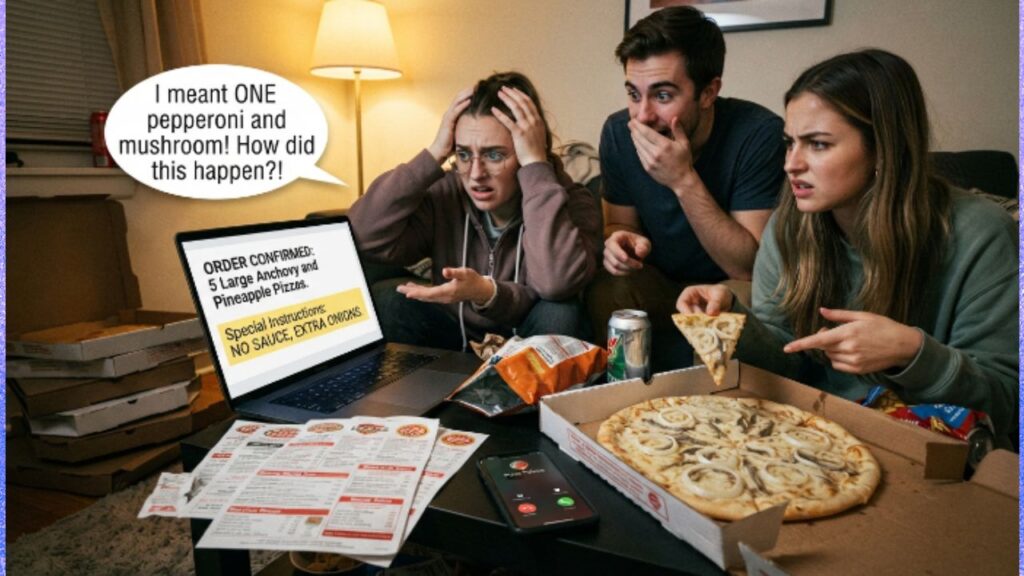
One common mistake is ordering only according to the number of people. Ten guests does not automatically equal one fixed number of pizzas because ten children, ten adults, and ten hungry teenagers are three very different situations.
Another mistake is ignoring leftovers. A little leftover Pizza isn’t a disaster. In fact, cold pizza sitting quietly in the refrigerator the next morning is one of civilization’s underrated achievements. Running out completely, however, can turn a cheerful gathering into a hunt for emergency sandwiches.
People also forget about flavor variety. If you’re feeding 30 people, ordering 14 identical pizzas may technically solve the quantity problem but create a topping problem. Offer a mixture of popular options, including at least one vegetarian choice and any required dietary alternatives.
Quick Pizza Serving Guide
Here’s a simple reference you can keep nearby while placing your order:
| Situation | Suggested Approach |
|---|---|
| Light eaters | 2 slices per person |
| Average adults | About 3 slices per adult |
| Children | About 2 slices per child |
| Hungry teenagers | Add extra pizza |
| Pizza + many sides | Order toward the lower estimate |
| Pizza as the full meal | Order toward the higher estimate |
| Thin crust | Consider slightly more food |
| Deep dish | Consider fewer slices |
| Big party | Add a small safety margin |
| Dietary restrictions | Order dedicated suitable pizzas |
This pizza serving guide is meant for planning, not precision engineering. Restaurant sizes vary, so always check the actual diameter and slice count before you place a large order.
How to Calculate Pizza for a Party
To calculate pizzas for a party, start by counting adults and children separately. Estimate around three slices for each adult and two for each child, then divide the total slices by the number of slices in your chosen pizza.
Next, adjust for hunger, crust, sides, and occasion. If the group is very hungry, add a little. If you’re serving lots of other food, reduce the estimate. Finally, add a small buffer when the event is important. It’s better to have a few leftover slices than a room full of people asking who forgot to order pizza.
Frequently Asked Questions About Pizza Calculator
How many pizzas do I need for 10 people?
For 10 average eaters, plan for about 4–5 pizzas, depending on pizza size, appetite, and side dishes.
How many pizzas do I need for 20 guests?
For 20 guests, around 8–10 pizzas is a good estimate when pizza is the main meal.
How many slices of pizza should each person eat?
A common guideline is 3 slices per adult and 2 slices per child, though hunger levels can vary.
How many slices are in a pizza?
Most standard pizzas are cut into 8–10 slices, but the exact number depends on the pizza size and pizzeria.
Does pizza size affect how many pizzas I need?
Yes. Small, medium, large, and extra-large pizzas provide different amounts of food, so always check the restaurant’s slice count and serving size.
How Many Pizzas for 40 People?
For 40 people, plan on about 15–18 pizzas, depending on appetite, pizza size, and side dishes.
How Many Pizzas for 10 People?
For 10 people, around 4–5 pizzas should be enough for an average meal.
How Many Pizzas for 15 People?
For 15 people, plan for approximately 5–7 pizzas, with extra needed for hungry guests.
How Many Pizzas for 50 People?
For 50 people, you’ll generally need about 19–23 pizzas, depending on serving size and appetite.
How Many Pizzas for 25 People?
For 25 people, around 9–12 pizzas is a practical estimate when pizza is the main meal.
Read This Blog:https://mynoval.com/what-time-was-it-7-hours-ago-find-out-instantly/
Final Thoughts on Using a Pizza Calculator
A pizza calculator isn’t really about complicated mathematics. It’s about removing one annoying uncertainty from party planning. Once you know the guest count, pizza size, slice count, appetite, and menu, figuring out how many pizzas to order becomes surprisingly simple.
For a normal gathering, start with the familiar pizza per person estimate, adjust for adults and children, and then consider the occasion. A pizza for a group should be generous enough that everyone gets a fair share, but not so excessive that you’re storing thirty slices beside the milk for the next two weeks.
And perhaps that’s the nicest thing about pizza planning: the calculation ends where the gathering begins. The boxes open, everyone reaches for a slice, somebody asks for the last piece way too early, and suddenly all that counting doesn’t seem so important anymore. Whether you’re arranging a pizza for birthday party, a family dinner, a game night, or a huge celebration, a thoughtful estimate helps make sure the food supports the moment instead of becoming the problem.
So before you order, count the people, check the pizza size, think about their hunger level, consider the sides, and leave yourself a little breathing room. Your future hungry guests will probably thank you for it.