

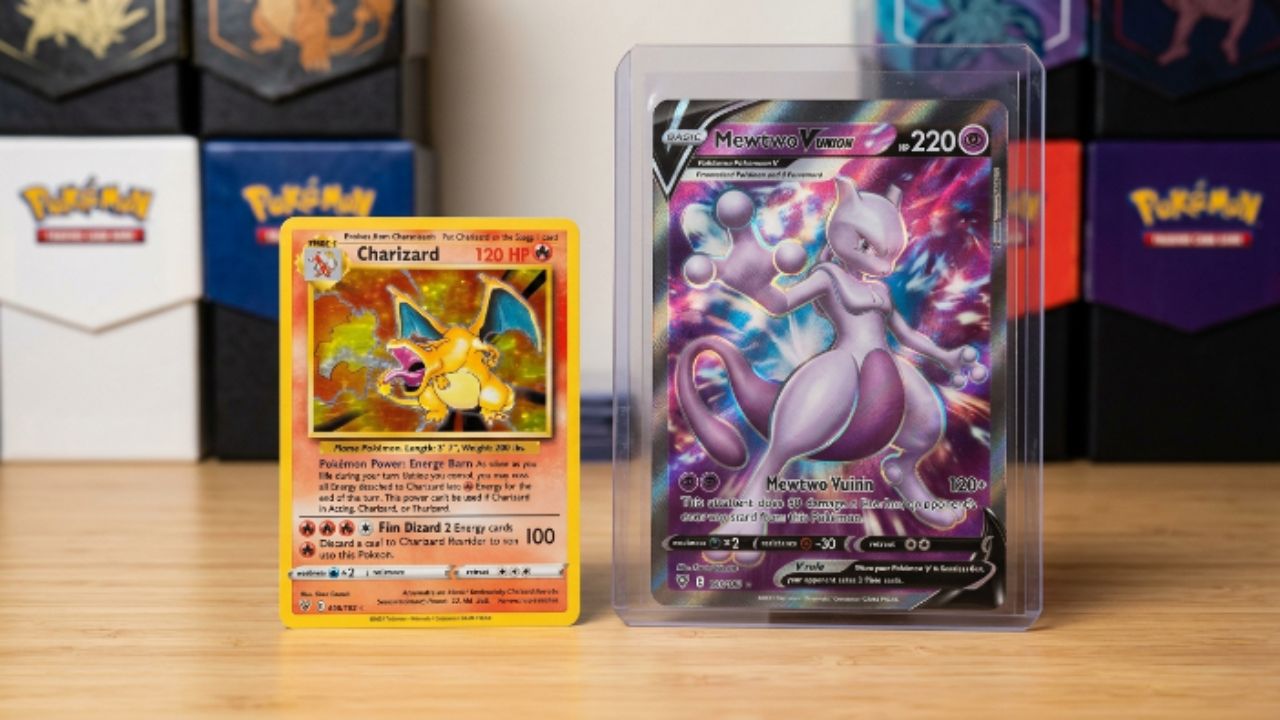
If you’ve ever opened a special collection and suddenly found a card that looked like it belonged in a tiny billboard rather than a deck, you’ve already met a jumbo card. The first time I held one, I honestly laughed a little. It was the same artwork, same Pokémon, but somehow it felt like the card had decided it wanted all the attention in the room. Bit dramatic maybe, but thats exactly how it feels.
The most common Jumbo Pokémon card dimensions are approximately 5 × 7 inches (127 × 178 mm). Older releases weren’t always identical though. Some early oversized cards measured around 2.75 × 3.75 inches (70 × 95 mm) or 67 × 95 mm, while a few promotional versions appeared in sizes close to 2.64 × 3.58 inches (67 × 91 mm) depending on the era and special release.
Unlike the Standard Pokémon card, oversized versions aren’t made for tournament Gameplay. Instead, they’re designed for display, collecting, and celebrating special releases.
Collectors often find jumbo cards inside:
- Pokémon booster pack promotional products
- Elite Trainer Box (ETB) bundles (selected editions)
- Special Collection Box
- Anniversary collections
- Premium gift sets
- Holiday collector products
- Promotional events
Many fans display these cards on shelves because the artwork looks stunning at a larger scale. A Holographic Charizard jumbo card hanging on a wall honestly grabs attention way faster than most posters.
Mini Pokémon Cards and Promotional Variations
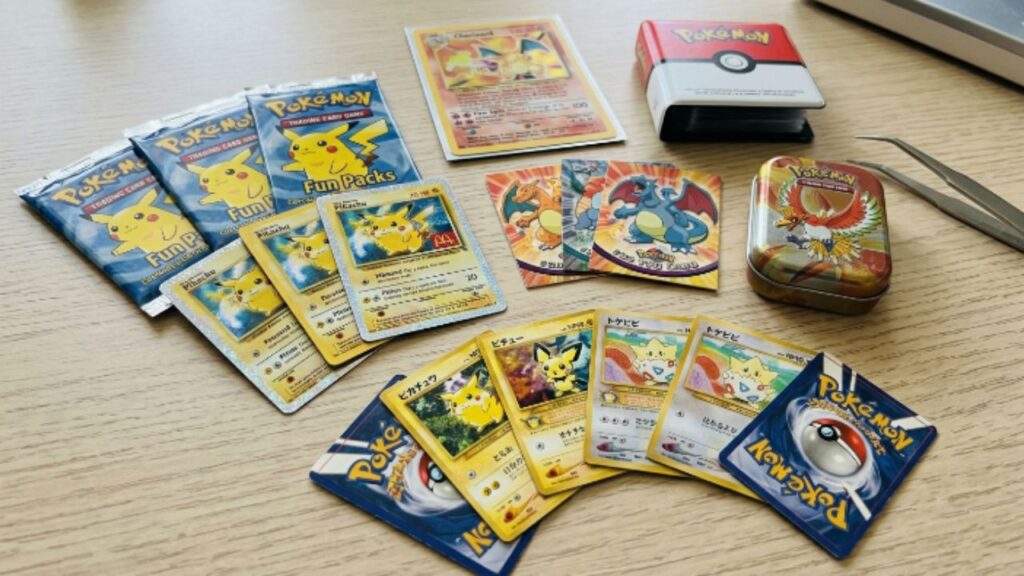
While oversized cards steal attention, Mini Pokémon cards quietly built their own fanbase. They’re cute, portable, and honestly kinda addictive to collect.
Mini cards usually aren’t legal for Tournament play either. They’re mostly designed as promotional merchandise, collectibles, or fun extras inside limited products.
You’ll also come across several kinds of Promo cards, including:
- Event-exclusive releases
- Championship promos
- Store-exclusive cards
- Movie promotional cards
- Anniversary editions
- Limited collaboration cards
- Prize cards
Although artwork changes constantly, official manufacturing keeps consistent printing quality using official Cardstock, premium inks, and accurate Card texture.
Pokémon Card Sleeve Dimensions
Buying beautiful cards but skipping protection is a little like buying a sports car and parking it in a hailstorm. It might survive…or it might not.
Since the official Pokémon card dimensions measure 2.5 × 3.5 inches (63.5 × 88.9 mm), accessories are made slightly larger.
Common sleeve sizes include:
| Accessory | Typical Size |
|---|---|
| Penny sleeve | Fits standard cards comfortably |
| Premium sleeve | Slightly thicker with better grip |
| Card sleeve | Tournament-ready protection |
| Toploader | Rigid plastic holder |
| Card holder | Display storage |
| Binder pocket | Standard trading card pages |
Most collectors prefer Polypropylene sleeves because they’re crystal clear and acid-free. Others use Polyethylene sleeves for inexpensive bulk storage.
Double sleeving has become increasingly popular too. A perfect-fit inner sleeve combined with a premium outer sleeve dramatically improves Scratch protection, dust resistance, and long-term Card preservation.
Choosing the Right Toploader
A Toploader isn’t just another plastic case. It’s basically armor.
If you’re storing expensive cards like Base Set Charizard, vintage holographics, or valuable promotional cards, rigid holders reduce bending significantly.
Many experienced collectors follow this order:
- Perfect-fit sleeve
- Premium sleeve
- Toploader
- Team bag (optional)
- Storage box
It sounds like overkill until you’ve accidentally dropped a valuable card. Then suddenly every layer makes perfect sense.
Best Binder Size for Pokémon Cards
Not every binder deserves your collection.
Cheap binders with metal rings can sometimes damage edges if pages shift around. That’s why many experienced members of the Trading community recommend side-loading binders.
A quality Card binder should offer:
- Acid-free pages
- PVC-free materials
- Secure zipper closure
- Side-loading Binder pocket
- Soft inner lining
- Strong page backing
Whether your collection contains fifty cards or five thousand, organization helps preserve both appearance and value.
Deck Boxes and Card Storage Solutions
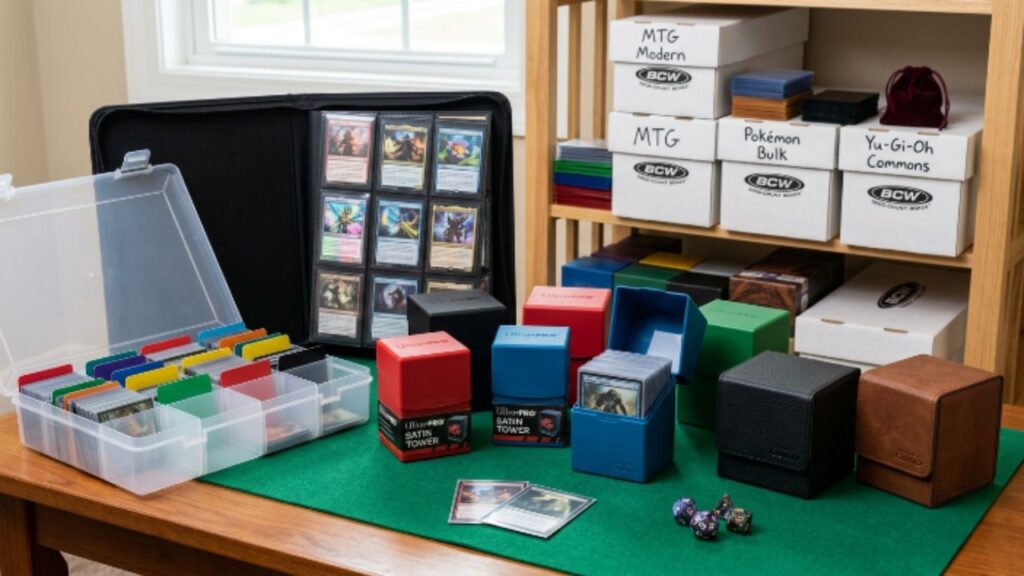
Competitive players think about transport.
Collectors think about preservation.
Luckily, one product often solves both problems.
A good Deck box keeps your playable deck safe during travel, while a larger Card storage box protects extra collections at home.
Popular storage methods include:
- Plastic archive boxes
- Premium deck cases
- Long cardboard storage boxes
- Waterproof containers
- Fire-resistant safes
- Display cabinets
For particularly valuable Collectibles, many collectors combine sleeves, toploaders, and lockable display cabinets.
Maybe its slightly obsessive…but expensive hobbies have a funny way of making caution feel normal.
UV Protection and Environmental Safety
One silent enemy almost nobody notices is sunlight.
Even indirect sunlight can slowly fade colors over several years.
Proper UV protection reduces:
- UV damage
- Color fading
- Yellowing
- Surface deterioration
Humidity matters too.
Too much moisture encourages card warping.
Too little humidity can make older cards brittle.
Experts usually recommend storing Pokémon cards between 35% and 50% humidity in cool indoor temperatures.
Simple silica gel packets inside storage containers help more than people expect.
Card Preservation Tips Every Collector Should Know
Whether your collection costs $50 or $50,000, basic care goes a long way.
Helpful habits include:
- Wash hands before touching cards.
- Never leave cards inside hot cars.
- Keep food away from open binders.
- Avoid bending cards during trading.
- Store vertically when possible.
- Replace damaged sleeves.
- Keep collections away from direct sunlight.
- Handle holographic cards by their edges.
Little habits dont seem important until years later when your cards still look almost new.
Authentic Pokémon Card vs Fake Pokémon Cards
Counterfeits have become surprisingly convincing.
Thankfully, official manufacturing standards make many fakes easier to identify once you know what to check.
Signs of an Authentic Pokémon card include:
- Correct Card weight
- Proper Card thickness
- Sharp printing
- Accurate colors
- Consistent borders
- High-quality Official cardstock
- Correct font spacing
- Smooth but recognizable Card texture
Warning signs of Counterfeit Pokémon cards include:
- Blurry artwork
- Incorrect dimensions
- Extremely glossy finish
- Misspelled names
- Wrong energy symbols
- Thin cardstock
- Washed-out colors
- Poor holographic patterns
Many collectors also perform the light test, although professional grading services generally discourage methods that could potentially damage valuable cards.
Pokémon Card Weight Explained
Most individual standard cards weigh approximately 1.78 grams, though slight manufacturing differences exist.
Other product weights commonly include:
| Product | Approximate Weight |
|---|---|
| Single card | 1.78 grams |
| Booster pack weight | 22–25 grams |
| ETB weight | 500–800 grams |
| Collection box weight | 280–300 grams (varies) |
Collectors sometimes compare Booster pack weight searching for heavier holographic packs, although modern manufacturing techniques have reduced the reliability of weight-based predictions.
Card Grading and Collector Quality
Professional Card grading has transformed the collecting hobby.
Companies examine:
- Centering
- Corners
- Edges
- Surface
- Print quality
- Scratches
- Whitening
A perfectly preserved Centered holo with clean edges may achieve a Gem Mint grade, dramatically increasing Card value.
Even tiny flaws can lower the final grade, which is why many collectors protect valuable pulls immediately after opening them.
Why Dimensions Matter During Card Grading
Grading companies don’t only inspect appearance.
They also verify Card dimensions.
If measurements differ noticeably from official manufacturing standards, graders investigate whether trimming, alteration, or counterfeit production may have occurred.
That makes understanding official Pokémon card measurements surprisingly useful for collectors.
Pokémon Card Value and Marketplace
Card prices rise and fall constantly.
Several factors influence Collectible value:
- Age
- Print run
- Popularity
- Condition
- Rarity
- Grading
- Historical significance
A pristine Base Set Charizard continues to be one of the hobby’s most recognizable treasures, while modern alternate-art cards have created excitement among newer collectors.
Rare cards frequently appear in online Auctions, private sales, conventions, and community trade events.
The Joy of Pokémon Card Collecting

Ask ten collectors why they enjoy the hobby and you’ll probably hear twelve different answers.
Some chase expensive cards.
Others simply enjoy opening packs.
Many love Deck building and Strategy.
Some spend weekends attending local Weekend meetups, sharing trades, stories, and favorite pulls.
The Pokémon community has always been about more than cardboard. It’s friendships, nostalgia, competition, and tiny moments of excitement packed into colorful rectangles.
One collector once said:
“Sometimes the rarest pull isn’t the card. It’s remembering who was standing beside you when you opened it.”
That sentence kinda stayed with me.
Frequently Asked Questions About Pokémon Card Dimensions
What are the official dimensions of a Pokémon card?
Official Pokémon card dimensions measure 2.5 × 3.5 inches (63.5 × 88.9 mm).
How thick is a Pokémon card?
The average Pokémon card thickness is approximately 0.012 inches (0.305 mm).
How much does a Pokémon card weigh?
Most standard cards weigh close to 1.78 grams.
Are Pokémon cards the same size as Magic cards?
Yes. Both Magic: The Gathering and Pokémon use the same standard trading card dimensions.
Are Pokémon cards bigger than Yu-Gi-Oh cards?
Yes. Yu-Gi-Oh! cards are slightly smaller than official Pokémon cards.
What size sleeves fit Pokémon cards?
Standard trading card sleeves designed for 2.5 × 3.5 inches cards fit perfectly.
What size binder fits Pokémon cards?
Any binder using standard trading card pages with side-loading pockets works well.
What size toploader fits Pokémon cards?
Standard 3 × 4 inch rigid toploaders are the industry standard.
How do you store Pokémon cards safely?
Store them inside sleeves, toploaders or binders, away from sunlight, moisture and extreme temperatures.
Pokemon Card Art Dimensions
The artwork on a standard Pokémon card is smaller than the full card itself, with the art box typically measuring about 2 × 2.3 inches (approximately 51 × 58 mm), though the exact dimensions can vary slightly by card design and generation. Full-art and alternate-art cards extend the illustration across nearly the entire card front, creating a more immersive collectible display.
read this blog:https://mynoval.com/8-inches-long/
Final Thoughts
Understanding Pokémon card dimensions isn’t just about memorizing numbers. It’s about knowing how to protect something that might become a treasured collectible years from now. Whether you’re opening your very first Pokémon booster pack, organizing a growing Pokémon collection, competing in local tournaments, or searching for that dream Rare Pokémon card, knowing the correct Card measurements, Width, Height, Thickness, and storage methods helps every step feel a little easier.
The hobby keeps changing, new expansions keep arriving, and fresh collectors join the Trading community every day. Yet one thing stays remarkably consistent: official Pokémon Trading Card Game (TCG) standards. Those familiar 2.5 × 3.5 inches (63.5 × 88.9 mm) have connected generations of fans since the early days of 1996 and the explosive popularity of 1999–2002. That’s kinda amazing when you stop and think about it.
If you found this guide helpful, share it with another collector, compare your favorite storage setup, or tell us about your best Rare pull in the comments. Every collection has a story, and honestly, those stories are often worth just as much as the cards themselves.