


If you’ve ever held a Pokémon card between your fingers and wondered why it feels almost identical to so many other trading cards, you’re not imagining it. I remember sitting on the bedroom floor years ago with a pile of slightly bent Pokémon Cards, trying to organize them into little stacks. One pile had Charizard, another had Blastoise, and somewhere underneath was a lonely Mewtwo that I’d convinced myself was incredibly rare. Funny thing is, before I ever cared about rarity, I cared about whether the cards actually fit inside the binder pockets I’d just bought. Turns out, that tiny question opens a surprisingly big door.
Understanding Pokémon Card Dimensions isn’t just something collectors obsess over. It matters if you’re buying sleeves, sending cards for grading, building a competitive deck, or simply trying to keep your childhood collection from getting scuffed. And honestly, once you know the measurements, loads of other things suddenly make sense.
Whether you’re new to the Pokémon Trading Card Game (TCG) or someone who’s been collecting since the Base Set, this guide walks through everything you need to know about Pokémon Card Size, measurements, protection, storage, authentication, and much more. There’ll be a few nerdy details along the way… but thats half the fun, isnt it?
Pokémon Card Dimensions Explained
The official Pokémon Card Dimensions have remained remarkably consistent since the beginning of the Pokémon Trading Card Game. This consistency allows cards printed decades apart to be shuffled together, stored in identical binders, and used during Tournament Play without compatibility issues.
A standard Pokémon card measures:
| Specification | Measurement |
|---|---|
| Card Width | 2.5 × 3.5 inches |
| Metric Size | 63.5 × 88.9 mm |
| Aspect Ratio | 5:7 Aspect Ratio |
| Corner Radius | 0.125-inch Corner Radius / 3.18 mm Corner Radius |
| Card Thickness | 0.012 inches / 0.305 mm |
| Card Weight | Approximately 1.78 grams |
These Standard Card Dimensions aren’t random. Manufacturers use them because they’re comfortable to shuffle, easy to protect with accessories, and work across countless products made for the wider Trading Card Game hobby.
Even premium cards with Holographic Foil, textured surfaces, or special finishes usually maintain the exact same outside dimensions. That’s pretty neat really, because it means a vintage holo and a modern card both slide into the same sleeve.
Pokémon Card Size: Why It Never Really Changes
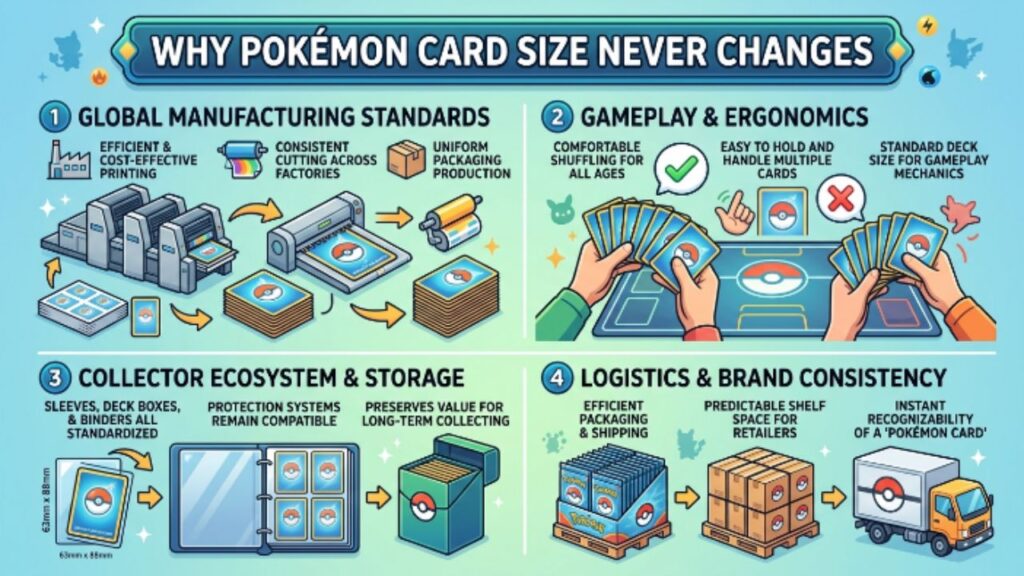
One of the most common questions collectors ask is:
What size is a Pokémon card?
The answer is wonderfully simple.
The official Pokémon Card Size is always:
- 2.5 × 3.5 inches
- 63.5 × 88.9 mm
This standard applies to nearly every regular card you’ll find, including:
- Basic Pokémon
- Evolution Pokémon
- Stage 1 Pokémon
- Trainer Cards
- Item Cards
- Supporter Cards
- Energy Cards
- Special Energy Cards
- Stadium Cards
Whether you open a fresh Booster Pack, buy a sealed Elite Trainer Box (ETB), or trade with friends, the physical dimensions remain consistent. Nintendo has kept these specifications stable because competitive play depends on every card being identical in size. Imagine trying to shuffle a deck where one card stuck out by even a few millimeters—it’d be a mess, honestly.
Pokémon Card Measurements in Inches and Millimeters
Many people search for Pokémon card measurements because accessories often list dimensions in different units.
Here’s a quick conversion.
| Measurement | Imperial | Metric |
|---|---|---|
| Width | 2.5 inches | 63.5 mm |
| Height | 3.5 inches | 88.9 mm |
| Thickness | 0.012 inches | 0.305 mm |
| Corner Radius | 0.125 inch | 3.18 mm |
These Card Measurements have become the industry standard for many Western Trading Cards, not just Pokémon.
Knowing the exact dimensions helps when purchasing:
- Card Sleeves
- Toploaders
- Binder Pockets
- Deck Box
- Display cases
- Storage organizers
Buying the wrong size might seem like a tiny mistake, but loose cards slide around while overly tight sleeves can stress the edges over time. Bit annoying, really.
Understanding Pokémon Card Thickness, Weight, and Construction
People often focus only on height and width, but Card Thickness and Card Weight matter just as much.
A genuine Pokémon card is approximately:
- 0.012 inches
- 0.305 mm
- Around 1.78 grams
These measurements are achieved through a sophisticated manufacturing process involving several layers.
Typical Card Construction includes:
- High-quality Cardstock
- Multiple paper layers
- An Adhesive Core
- Protective Ink Layers
- Durable Lamination
- Sometimes a decorative Foil Layer
- Premium Holographic Foil for rare cards
This layered design improves Card Durability, creates a professional finish, and makes cards harder to counterfeit.
The Printing Process is monitored through strict Quality Control, ensuring every official Pokémon card meets consistent Card Specifications. Sure, tiny printing variations happen now and then, but the physical dimensions stay impressively accurate.
How Pokémon Cards Are Manufactured
There’s a surprising amount of engineering hiding inside something that weighs less than two grams.
During manufacturing, enormous sheets of printed cards pass through several stages.
The process generally includes:
- Precision color printing
- Protective coating application
- Lamination
- Die cutting
- Rounded corner cutting
- Surface inspection
- Packaging into Booster Pack products
Every stage contributes to overall Card Quality and ensures collectors receive cards that meet official standards.
Even rare releases, promotional cards, and premium foil cards follow the same production philosophy. It’s almost boringly consistent…which, for collectors, is actually a really good thing.
Pokémon Card Dimensions and Competitive Play
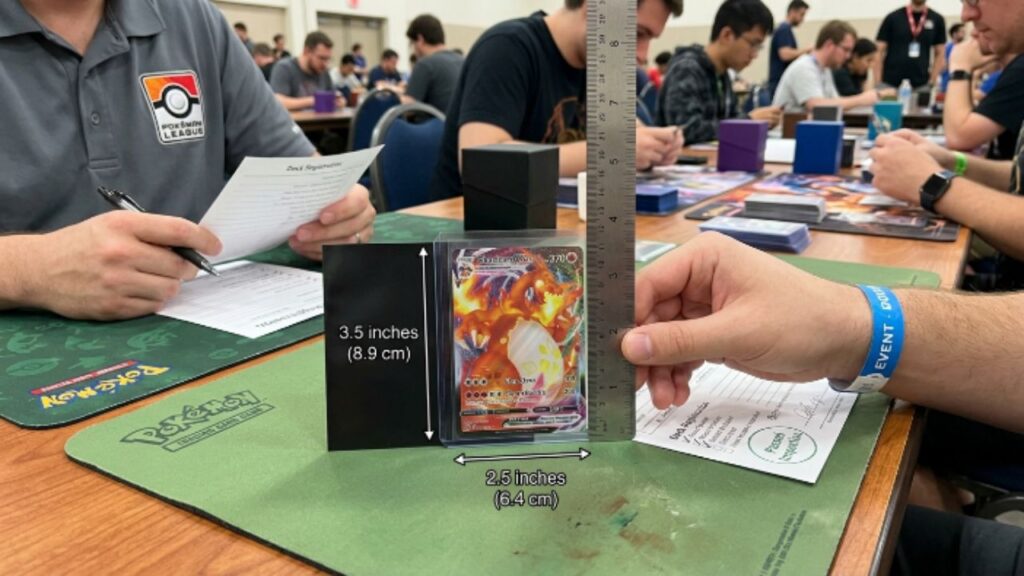
The reason Pokémon Card Dimensions stay standardized goes beyond manufacturing.
Competitive gameplay depends on identical measurements.
Every Tournament Legal Cards deck contains exactly a 60-Card Deck, where cards must shuffle smoothly, stack evenly, and avoid revealing themselves through physical differences.
Standard sizing benefits:
- Better Deck Building
- Fair Tournament Play
- Consistent Card Shuffling
- Balanced Competitive Deck construction
- Easier storage
- Universal accessories
Whether you’re placing Bench Pokémon, evolving through an Evolution Chain, or using a carefully planned Theme Deck or Battle Deck, standardized dimensions help maintain fairness.
Imagine trying to play if one Trainer Card were slightly wider than the others. Your opponent would spot it instantly. Yeah…that wouldnt end well.
Pokémon Card Dimensions Across Different Card Types
Although artwork changes dramatically, standard cards all share identical measurements.
Regular-sized cards include:
- Basic Pokémon
- Stage 1 Pokémon
- Evolution Pokémon
- Trainer Cards
- Supporter Cards
- Item Cards
- Energy Cards
- Special Energy Cards
- Stadium Cards
Only specialty releases differ.
Examples include:
- Promotional Pokémon Cards
- Oversized Pokémon Cards
- Jumbo Pokémon Cards
These oversized versions are designed mainly for display rather than gameplay and don’t fit standard sleeves or binders.
We’ll explore those larger cards, along with the best storage solutions, grading advice, authentication techniques, sleeve sizes, binder recommendations, and comparisons with games like Magic: The Gathering, Yu-Gi-Oh!, and KeyForge in the next part of this guide.
Frequently Asked Questions (FAQs)
Are all Pokémon cards the same size?
Yes, almost all standard Pokémon Cards use the official Pokémon Card Size of 2.5 × 3.5 inches (63.5 × 88.9 mm). This includes Pokémon, Trainer, and Energy cards used in the Pokémon Trading Card Game (TCG). The only exceptions are special products like Jumbo Pokémon Cards and certain promotional display cards.
What are the exact Pokémon card dimensions?
The official Pokémon Card Dimensions are:
- Width: 2.5 inches (63.5 mm)
- Height: 3.5 inches (88.9 mm)
- Thickness: 0.012 inches (0.305 mm)
- Weight: About 1.78 grams
- 5:7 Aspect Ratio
- 0.125-inch Corner Radius (3.18 mm)
These measurements are standardized worldwide for tournament and collector use.
What size sleeves fit Pokémon cards?
The best sleeve size for standard Pokémon cards is 67 × 91 mm Sleeves. Both Penny Sleeves and Premium Sleeves are widely used, while brands like Dragon Shield and Ultra Pro Eclipse are popular choices among competitive players and collectors.
What size toploader should I use for Pokémon cards?
A standard 76 × 101 mm Toploader is designed to fit Pokémon cards placed inside a penny sleeve. This combination offers excellent protection during shipping, trading, or long-term storage.
Are Japanese and English Pokémon cards the same size?
Yes. Both Japanese Pokémon cards and English Pokémon cards follow the same official Standard Card Dimensions. While the artwork, language, and print finish may differ slightly, the physical size remains identical.
How can I tell if a Pokémon card is fake?
One measurement alone isn’t enough, but checking the card’s dimensions, weight, thickness, print quality, and corners can help. Counterfeit Detection often includes a Card Weight Test, Thickness Test, Corner Radius Test, and close inspection of the printing. Comparing suspected Fake Pokémon Cards with Genuine Pokémon Cards is one of the most reliable methods of Card Authentication.
What size binder is best for Pokémon cards?
A Side-Loading Binder with 9-Pocket Pages made from PVC-Free Binder materials or Acid-Free Binder Pages is ideal. These protect your collection from dust, scratches, and long-term damage while keeping cards securely in place.
Do graded Pokémon cards have different dimensions?
The cards themselves remain the same size, but once graded by PSA or Beckett, they are sealed inside larger protective holders. These slabs protect the card while showcasing its Card Centering, Card Edges, and Card Surface during evaluation.
Read This Blog:https://mynoval.com/how-big-is-1-5-inches/
Final Thoughts
Knowing the exact Pokémon Card Dimensions may seem like a small detail at first, but it plays a surprisingly important role in every part of the hobby. From choosing the right sleeves and binders to spotting counterfeit cards or preparing valuable collectibles for grading, accurate measurements help protect both your cards and their value. Funny how a few millimeters can make such a big differnce.
Whether you’re opening your very first Booster Pack, building a competitive 60-Card Deck, or preserving a treasured Holographic Charizard from the Base Set, understanding the official Card Specifications gives you more confidence as a collector and player. Pair your cards with quality accessories like Polypropylene Sleeves, Toploaders, a sturdy Deck Box, and proper Trading Card Storage Boxes for the best long-term results.
At the end of the day, Pokémon cards are more than just pieces of Cardstock they’re memories, investments, and part of a global Trading Community that continues to grow with every new generation. Treat your collection with care, store it wisely, and it’ll stay ready for battles, trades, or simply the joy of flipping through your favorite cards years from now.
Have a favorite Pokémon card or a collecting tip of your own? Share it in the comments below we’d love to hear about the treasures hiding in your collection.