

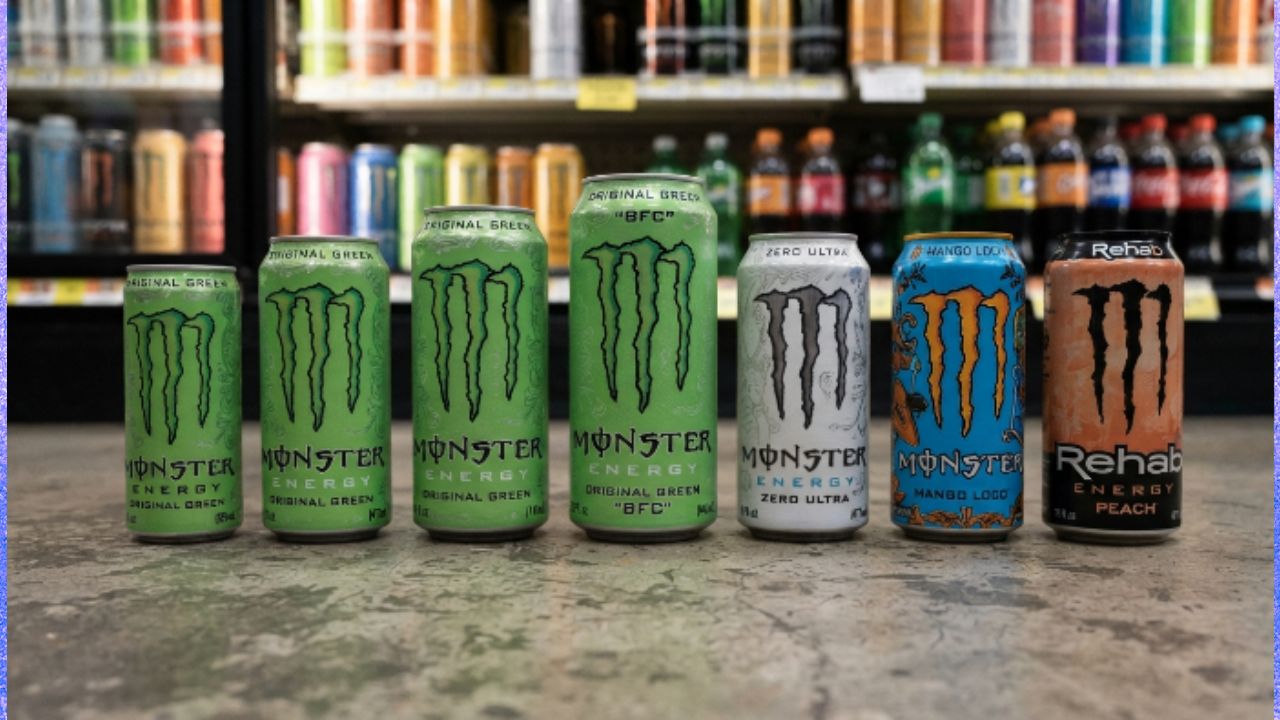
Have you ever stood in front of a fridge, reaching past the soda bottles, and suddenly wondered why one can looks almost normal while another seems tall enough to have its own postcode? That little moment of confusion is exactly why Monster can sizes are more interesting than they first appear. A Monster Energy Drink can isn’t just a shiny piece of aluminum; its height, diameter, capacity, and shape are all tied to how people hold, store, transport, and drink it.
And honestly, the first time you compare a Monster Standard with a smaller Monster Mini or a huge Monster Mega, the difference feels almost funny. Same general family, wildly different personality. One sits quietly in your hand, another feels like it was designed for a very long afternoon.
If you’re trying to understand Monster can dimensions, fit cans into a cooler, compare energy drinks, or simply figure out how big is a Monster can, this guide brings the measurements together in one place. The dimensions below are useful approximations because exact can specifications can vary by market, product, manufacturer, and packaging design.
Monster Can Sizes at a Glance
Before getting into the nerdier side of beverage can dimensions, here’s the quick picture. The most familiar Monster format is around 16 oz / 473 ml, while larger versions can reach 24 oz / 710 ml. Smaller formats exist too, although availability depends heavily on the market.
| Can/Beverage | Approx. Volume | Approx. Height | Approx. Diameter |
|---|---|---|---|
| Monster Mini | 8 oz / 236 ml | 5.0 in / 127 mm | 2.3 in / 58 mm |
| Monster Standard | 16 oz / 473 ml | 6.2 in / 157 mm | 2.6 in / 66 mm |
| Monster Mega | 24 oz / 710 ml | 7.0 in / 178 mm | 2.9 in / 74 mm |
| Monster Juice | 15.5 oz / 459 ml | 6.1 in / 155 mm | 2.6 in / 66 mm |
| Monster Rehab | 15.5 oz / 459 ml | 6.1 in / 155 mm | 2.6 in / 66 mm |
| Red Bull | 8.4 oz / 250 ml | 5.4 in / 137 mm | 2.13 in / 54 mm |
| Standard Soda | 12 oz / 355 ml | 4.83 in / 123 mm | 2.6 in / 66 mm |
| Tall Boy Beer | — | 7.2 in / 183 mm | 3 in / 76 mm |
These numbers are best treated as practical reference measurements rather than universal engineering specifications. Real-world can dimensions can change slightly depending on the exact package, regional format, and production line.
Monster Mini: The Compact Option

A Monster Mini around 8 oz / 236 ml is dramatically less imposing than the familiar large Monster format. At approximately 5.0 inches tall and 2.3 inches wide, it has a compact footprint that makes it easier to slip into smaller spaces.
Think of it as the can that doesn’t need to announce its arrival. In a crowded fridge storage area, those extra inches matter more than you’d expect.
The smaller body also illustrates an important idea in packaging engineering: volume isn’t simply about making something taller. Designers have to balance height, diameter, stability, grip, and the practical realities of filling and sealing the container.
Monster Standard: The Familiar 16 oz Can
The Monster Standard is the format many people picture immediately when someone says Monster. At roughly 16 oz / 473 ml, it measures approximately 6.2 inches tall and 2.6 inches in diameter.
So, if you’re asking how tall is a Monster can, this is usually the useful starting point: roughly 6.2 inches for a standard 16 oz format.
Its cylindrical shape isn’t accidental. A can has to survive pressure, stacking, transportation, handling, opening, and the occasional unfortunate drop onto a countertop. That’s where structural integrity, precision engineering, and material science quietly enter the story.
Monster Mega: When Seven Inches Doesn’t Sound Small
The Monster Mega, listed here at about 24 oz / 710 ml, is roughly 7.0 inches tall and around 2.9 inches across. In other words, it has noticeably more presence than the standard version.
A 24 oz Monster can dimensions comparison is especially useful if you’re designing a cooler, checking a vehicle cup holder, or planning retail stacking. A can that is nearly seven inches tall behaves differently from one around five inches.
The increased capacity also explains why bigger cans can feel surprisingly heavy once filled. The empty package may be relatively light because of lightweight construction, but liquid adds up quickly.
Monster Juice and Monster Rehab Sizes
Not every Monster product follows exactly the same capacity format. Monster Juice and Monster Rehab, for example, are commonly represented in this comparison at about 15.5 oz / 459 ml, with dimensions close to 6.1 inches tall and 2.6 inches in diameter.
That puts them physically near the standard Monster family even though the products themselves can have different formulations and visual identities.
This is a neat example of how can design can preserve family recognition. Consumers may identify a brand from the shape, graphics, colors, opening, and overall hand feel before they even read the label. That’s basically consumer psychology hiding inside a refrigerator.
Why Monster Cans Have Different Sizes
At first glance, choosing a can size sounds easy: make it hold more liquid and make the can bigger. Real beverage can engineering isn’t nearly that simple, though.
Manufacturers have to think about:
- Can height
- Can diameter
- Can capacity
- Wall thickness
- End size
- Filling equipment
- Storage requirements
- Consumer grip
- Transportation
- Retail shelf space
- Manufacturing costs
- Material usage
- Product visibility
A taller can can provide more volume without becoming extremely wide. A wider can may offer a different grip and more stability, but it consumes more shelf and cooler space. Every millimeter becomes part of a much larger puzzle.
Monster Can Sizes Compared With Red Bull
The comparison between Monster vs Red Bull can size is probably one of the easiest ways to understand beverage packaging differences.
A Red Bull format around 8.4 oz / 250 ml is approximately 5.4 inches tall and 2.13 inches in diameter in the reference measurements above. Compared with a 16 oz Monster at roughly 6.2 inches tall and 2.6 inches wide, the Monster has a much larger overall footprint.
That doesn’t mean one package is universally better. They’re designed around different product volumes, brand identities, and consumer expectations.
The classic Red Bull shape is notably slimmer, while Monster’s larger cylindrical presence feels more substantial. It’s a perfect example of an energy drink can comparison where capacity and branding work together.
Monster vs Standard Soda Can
A typical 12 oz / 355 ml standard soda can is about 4.83 inches tall and approximately 2.6 inches in diameter.
Notice something interesting?
The diameter can be similar to the standard Monster format while the height changes considerably. That’s why comparing only width can be misleading. If you’re searching for Monster vs soda can size, look at both dimensions and capacity.
A 12 oz soda can and a 16 oz Monster may occupy a similar width on a shelf, but the Monster rises higher. That difference becomes important in cooler storage, vending machines, cabinet shelves, and beverage carriers.
Monster vs Tall Boy Can
A Tall Boy can is commonly associated with larger beer formats and can be around 7.2 inches tall and 3 inches wide in the reference comparison.
That makes a large Monster can and a Tall Boy surprisingly close in overall height.
Still, don’t assume every 24 oz beer can dimensions specification will match every 24 oz energy drink package. Can formats vary by producer and market. The phrase “24 oz can” tells you the volume, not necessarily the exact physical dimensions.
That’s a useful lesson whenever you’re comparing can measurements: capacity and physical size are related, but they aren’t identical.
Understanding Monster Can Dimensions in Inches and Millimeters
People search for Monster can size in inches because inches are easy to visualize. Packaging engineers, however, often work in millimeters because small dimensional differences matter.
For example:
- 5.0 inches ≈ 127 mm
- 5.4 inches ≈ 137 mm
- 6.1 inches ≈ 155 mm
- 6.2 inches ≈ 157 mm
- 7.0 inches ≈ 178 mm
- 7.2 inches ≈ 183 mm
Likewise, approximate diameters include:
- 2.13 inches ≈ 54 mm
- 2.3 inches ≈ 58 mm
- 2.6 inches ≈ 66 mm
- 2.9 inches ≈ 74 mm
- 3 inches ≈ 76 mm
So when someone asks how many inches is a Monster can, the honest answer is: it depends on which Monster can you’re holding.
Can Diameter, Width, and Height Aren’t the Same Thing
Here’s where terminology can get a little slippery.
For a cylindrical can, can diameter generally describes the distance across the circular body. People often use can width in the same practical sense, although technical packaging specifications may use more precise terminology.
Can height measures the vertical dimension from bottom to top.
Can length may appear in product databases or packaging contexts, but for a cylindrical beverage container, “height” is generally the clearer description.
If you’re measuring one at home, place the can upright on a flat surface and measure from the base to the highest point. Then measure straight across the circular body. Don’t measure around the circumference unless you’re specifically looking for circumference.
What Are Beverage Cans Actually Made Of?

Most modern beverage cans are associated with aluminum cans, although steel cans and tin-plated steel have also played important roles in beverage packaging.
Aluminum is popular because it combines relatively low weight with useful strength, formability, corrosion resistance, and recyclability. That combination supports the industry’s obsession with getting more performance from less material.
The result is a package that looks simple but involves serious aluminum manufacturing, forming, coating, printing, filling, and sealing.
Even the wall thickness isn’t random. The container has to remain strong enough for handling and internal pressure while avoiding unnecessary material.
The Engineering Behind a Simple Can
A beverage can may look like something you could sketch in ten seconds. Making millions of them consistently is another story.
Modern packaging science considers pressure, metal deformation, seams, coatings, dimensions, filling speeds, transportation, and consumer handling.
The top and bottom aren’t simply flat circles either. The geometry helps the package withstand pressure while keeping material usage under control. Structural integrity matters because a damaged or weakened can can become a serious packaging problem.
This is where precision measurements, mass production, and packaging engineering meet. A tiny dimensional adjustment repeated across millions of units can make a major difference in material costs and manufacturing efficiency.
Why Can Shape Matters to Your Hand
Ever notice that some cans feel just right in your palm while others feel awkward?
That’s ergonomics at work, whether you realize it or not.
A can’s diameter influences grip comfort. Its height changes how it sits in your hand. The surface coating affects slipperiness. The weight changes how stable it feels.
That’s why hand feel, grip comfort, and user experience (UX) aren’t only concepts for phones and websites. Physical products have UX too. A beverage can is basically a tiny piece of industrial design that you hold while thinking about something completely different.
Slim Cans, Sleek Cans, and Tall Cans
A slim can usually has a narrower body, creating a taller and more elegant appearance. A sleek can can be designed around similar visual principles.
A tall can increases height relative to width, while a standard can generally uses a more familiar cylindrical proportion.
These distinctions are important for energy drink can sizes because brands may use different silhouettes to create a visual identity. The package isn’t merely carrying liquid; it’s carrying a brand.
That’s also why Monster Energy, Red Bull, and other functional beverages can look immediately different even before you recognize the logo.
Can Sizes and Packaging Logistics
Imagine a warehouse containing thousands of cases. Suddenly, a difference of half an inch doesn’t feel tiny anymore.
Retail stacking, case dimensions, pack dimensions, and shipping optimization all depend on physical package geometry. Warehouses need products to stack securely. Trucks need efficient use of space. Stores need shelves and coolers that fit the products without wasted gaps.
A 24 oz package also changes the number of units that can occupy a given area compared with smaller cans. That’s why beverage pack dimensions are just as important to logistics teams as the can itself.
The can you casually grab from a cooler has already travelled through a surprisingly complicated chain of transportation logistics.
6-Pack, 12-Pack, and 24-Pack Considerations
Individual dimensions become even more important when cans are bundled.
A 6-pack has one set of packaging requirements. A 12-pack needs different case dimensions. A 24-pack can become a serious stacking object in a warehouse.
For retailers, beer cases, energy drink cases, and other beverage packages must be stable enough for storage and movement. Packaging designers think about how cartons fit together, how much empty space exists, and how efficiently products can be moved.
This is why retail packaging isn’t merely about making something pretty. It is also about making it survive the journey from factory to shelf.
Monster Can Sizes and Cooler Storage
If you’re trying to organize a refrigerator, Monster can sizes suddenly become very practical information.
A roughly 6.2-inch standard Monster needs more vertical clearance than a 12 oz soda can around 4.83 inches. A 24 oz Monster can at about 7.0 inches may require even more room.
Before buying a mini fridge or beverage cooler, check its interior shelf height rather than relying on the advertised external dimensions. Doors, shelves, compressor housings, and curved interiors can steal useful space.
And yes, this is one of those moments where measuring twice saves you from discovering that your giant energy drink is technically homeless.
Energy Drinks Aren’t the Only Beverages With Can Variations
The world of ready-to-drink (RTD) beverages is packed with different package shapes.
You may encounter:
- Energy drinks
- Carbonated soft drinks
- Functional beverages
- Soda
- Beer
- Flavored beverages
- Some nutritional supplement drinks
Brands such as Monster Energy, Red Bull, and White Claw use packaging that reflects product positioning and serving size.
Even within beer, a Tall Boy Beer can look quite different from a traditional smaller can. Meanwhile, craft beer producers may select unusual formats to create a distinctive shelf presence.
So, there isn’t one universal “beverage can size.” There’s an entire ecosystem of formats.
Why Bigger Doesn’t Always Mean Better

A 24 oz can might seem like the obvious winner if you’re thinking purely about quantity. But bigger packaging isn’t automatically more convenient.
A larger can can be:
- Taller to store
- Heavier when full
- Less comfortable for smaller hands
- More difficult to fit into cup holders
- More space-consuming during transport
- Different in how quickly the beverage is consumed
Meanwhile, a smaller can can be easier to carry and chill.
This is where consumer psychology, portability, and ergonomics collide. Packaging decisions are often about the experience surrounding the product, not just the number printed beside “oz.”
Can Sizes and Sustainability
There’s another part of the story that doesn’t get enough attention: what happens after the drink is gone.
Recyclable aluminum cans can enter established recycling streams, where recovered metal can be processed and used again. Aluminum recycling is especially valuable because aluminum can be recycled repeatedly without simply becoming useless waste.
The broader idea of circular recycling connects packaging design with resource recovery. Lightweight cans can also reduce the amount of material transported compared with heavier packages, though the overall environmental footprint depends on manufacturing, transport, recycling rates, energy sources, and other factors.
So sustainable beverage packaging isn’t one magic material. It’s a chain of decisions.
A Quick Monster Can Size Comparison
| Format | Approx. Volume | Approx. Height | Approx. Diameter |
|---|---|---|---|
| Monster Mini | 8 oz / 236 ml | 5.0 in | 2.3 in |
| Monster Standard | 16 oz / 473 ml | 6.2 in | 2.6 in |
| Monster Mega | 24 oz / 710 ml | 7.0 in | 2.9 in |
| Monster Juice | 15.5 oz / 459 ml | 6.1 in | 2.6 in |
| Monster Rehab | 15.5 oz / 459 ml | 6.1 in | 2.6 in |
| Red Bull | 8.4 oz / 250 ml | 5.4 in | 2.13 in |
| Standard Soda | 12 oz / 355 ml | 4.83 in | 2.6 in |
| Tall Boy | — | 7.2 in | 3 in |
Again, these are approximate reference values, not a guarantee that every can sold everywhere will match them exactly.
Common Questions About Monster Can Sizes
How tall is a Monster can?
A typical 16 oz Monster can is approximately 6.2 inches (157 mm) tall. Exact measurements can vary depending on the product and regional packaging format.
How wide is a Monster Energy can?
A standard Monster format in this comparison is around 2.6 inches (66 mm) in diameter. Larger formats can be wider.
How big is a 24 oz Monster can?
A 24 oz / 710 ml Monster can is approximately 7.0 inches (178 mm) tall and 2.9 inches (74 mm) wide based on the reference dimensions used here.
What is the standard Monster can size?
The familiar standard format is approximately 16 oz / 473 ml, measuring around 6.2 inches tall and 2.6 inches in diameter.
How big is an 8 oz Monster can?
An 8 oz / 236 ml Monster Mini is approximately 5.0 inches tall and 2.3 inches in diameter in the reference table.
How Much Does a Can of Monster Weigh?
A full 16 oz Monster can weighs roughly 17–18 ounces (480–510 grams), including the aluminum can and beverage.
How Tall Is a Monster Can in Inches?
A standard 16 oz Monster can is approximately 6.2 inches (157 mm) tall, though dimensions can vary slightly by product and market.
How to Measure a Monster Can Yourself
If you need an exact measurement for a particular can, don’t rely only on online charts. Grab a ruler or measuring tape and check the physical container.
Measure three things:
- Height: Place the can upright and measure from its base to its top.
- Diameter: Measure straight across the widest circular section.
- Circumference: Wrap a flexible tape around the body if you need the distance around it.
For a more precise result, use millimeters rather than rounding everything to the nearest inch. A difference of a few millimeters might not matter for curiosity, but it can matter for packaging engineering, product mockups, or custom storage.
Read This Blog:https://mynoval.com/what-time-was-it-7-hours-ago-find-out-instantly/
Final Thoughts on Monster Can Sizes
The humble can is one of those objects that becomes fascinating the moment you actually stop and look at it. A 16 oz Monster can is not merely 473 ml of beverage sitting inside metal. Its height, diameter, wall structure, opening, shape, and materials are all pieces of a much larger system involving manufacturing, packaging science, logistics, retail, ergonomics, and recycling.
From the compact Monster Mini to the imposing Monster Mega, the differences in Monster can dimensions show how much thought can hide inside something we casually pull from a cooler.
And maybe that’s the fun part. A can looks simple until you ask why it’s that exact size. Then suddenly you’re measuring inches, converting to millimeters, comparing Red Bull, checking Tall Boy dimensions, thinking about shelf space, and wondering how many of these things fit in your fridge.
Sometimes the most ordinary objects have the strangest little stories built into them.